
Best Content Pillar & Hub Examples
Study 8 content pillar pages that built massive topical authority. Analysis of structure, internal linking, keyword coverage, and ranking performance.
💡 Key Takeaway
Study 8 content pillar pages that built massive topical authority. Analysis of structure, internal linking, keyword coverage, and ranking performance.
Content pillars are one of the most misunderstood concepts in SEO and content marketing. Most explanations make them sound like a structural choice -- "write a long page, then write smaller pages that link to it." But the real purpose of a content pillar is topic authority: showing Google (and your readers) that you are the definitive resource on a subject.
When done right, a content pillar plus supporting cluster content creates a moat that's extremely difficult for competitors to displace. When done wrong, it's just a long page nobody links to.
These 8 real examples show what pillar content looks like in practice.
1. HubSpot -- The Marketing Hub

The pillar structure: HubSpot maintains hundreds of "ultimate guide" pillar pages -- but their most sophisticated pillar structures function as true topic hubs. Their "Email Marketing" hub includes:
- Pillar page: "The Ultimate Guide to Email Marketing" (6,000+ words, covering every aspect of email marketing strategy)
- Cluster content: 40+ supporting posts covering subtopics (email subject lines, segmentation, A/B testing, email types, deliverability)
- Tools: Free email signature generator, email templates, subject line checker
- Course: HubSpot Academy email marketing certification
What makes it work: The hub is genuinely comprehensive -- a first-time email marketer or a sophisticated one both find value. The pillar page acts as a table of contents for the entire topic, with each H2 section linking to a dedicated cluster post.
The conversion structure: Free tools and certifications are embedded throughout the hub, capturing leads at every intent level. Someone learning about segmentation can download a segmentation guide. Someone already running campaigns can access HubSpot's email tool.
The lesson: A content hub converts better when free tools and downloads are distributed throughout the content, not just at the end.
2. Ahrefs -- The SEO Knowledge Base
The pillar structure: Ahrefs' "SEO" pillar is one of the most comprehensive topic hubs on the internet:
- Main pillar: "SEO: The Complete Guide for Beginners" (comprehensive overview with table of contents)
- Tier 2 pillars: Dedicated long-form guides for each major SEO topic (keyword research, link building, on-page SEO, technical SEO, local SEO)
- Cluster posts: 300+ supporting posts covering specific tactics, tools, and questions
- Glossary: A dedicated SEO glossary with 200+ defined terms
What makes it work: The hub creates a "knowledge graph" -- Google can see that Ahrefs has authoritative content on SEO at every level of depth. Someone searching for the definition of "anchor text" lands on Ahrefs' glossary; someone searching for "how to do a site audit" lands on a cluster post; someone searching for comprehensive SEO guidance lands on the pillar.
Internal linking structure: The pillar pages link extensively to cluster posts, and cluster posts link back to the relevant pillar. This bidirectional linking distributes authority across the hub.
The lesson: A true content hub requires content at multiple depth levels -- definition-level, how-to-level, and comprehensive-guide-level -- all interconnected.
Averi automates this entire workflow
From strategy to drafting to publishing — stop doing it manually.
3. Moz -- The SEO Learning Center
The pillar structure: Moz's Learning Center is a structured course-like content hub that covers all aspects of SEO in a deliberately educational format:
- Topic organization: Each major SEO topic (beginners, keyword research, link building, etc.) has its own hub page
- Progress structure: Content is organized from beginner to advanced, creating a learning path
- Interconnected glossary: Every technical term used in the guides links to a glossary definition
What makes it work: The Learning Center is designed for long sessions, not individual article reads. The navigation encourages exploration, and the structured progression keeps users in the Moz ecosystem for extended periods.
The authority signal: By creating what amounts to an SEO textbook available for free, Moz established a credential of authority that backlinks and rankings reflect. The Learning Center has generated tens of thousands of backlinks from educational institutions, blogs, and practitioners.
The lesson: Structuring content as a curriculum (beginner to intermediate to advanced) creates longer session depths and signals educational authority to Google.
4. Shopify -- "How to Start an Online Business"

The pillar structure: Shopify's entrepreneur education hub is built around the "how to start a business" topic cluster:
- Pillar page: "How to Start an Online Business: Step-by-Step Guide"
- Cluster content: Individual guides for each business type ("How to start a dropshipping business," "How to start an Etsy store," "How to start a clothing brand")
- Supporting content: Business plan templates, product sourcing guides, financial planning tools
- Adjacent clusters: Legal guides, marketing guides, logistics guides
What makes it work: The hub targets the entire entrepreneurial journey, from initial idea to operational business. At every stage of that journey, there's Shopify content -- and at every stage, Shopify is positioned as the platform to use.
The search capture strategy: The "how to start [type of business]" keyword family has enormous search volume and purchase intent. Shopify has created content for hundreds of specific business types, each ranking for its own query.
The lesson: "How to start [your use case]" is one of the most powerful pillar architectures for platforms -- it targets buyers at the beginning of their journey.
5. Buffer -- The Social Media Strategy Hub
The pillar structure: Buffer maintains a comprehensive social media strategy hub:
- Platform-specific guides: Individual comprehensive guides for each major platform (Instagram, Twitter/X, LinkedIn, TikTok, Facebook)
- Strategy pillar: "Social Media Marketing: The Complete Guide" as the overarching resource
- Cluster content: Content cadence, analytics, content types, tools comparisons, case studies
What makes it work: Platform-specific guides target high-volume, high-intent keywords ("[Platform] marketing strategy") while the overarching guide targets the meta-query. Buffer's ICP (small businesses and early marketing teams) is consistently addressed throughout.
Freshness strategy: Platform algorithms change constantly, which gives Buffer recurring reasons to update their platform guides. Each update gets re-promoted and re-indexed, maintaining rankings in a space where freshness is a significant factor.
The lesson: In fast-changing topics (social media, AI tools, etc.), a hub strategy requires a freshness commitment. Stale pillar content in dynamic topics will be overtaken by newer resources.
Build your content engine with Averi
AI-powered strategy, drafting, and publishing in one workflow.
6. Hotjar -- The UX Research Hub
The pillar structure: Hotjar's UX Research hub is built around their core audience's learning needs:
- Methodology pillar: "The Definitive Guide to UX Research"
- Method-specific guides: Individual deep dives for each UX research method (user interviews, usability testing, surveys, card sorting, heatmaps)
- Glossary cluster: UX and research terminology definitions
- Template cluster: Research templates, survey question libraries, interview scripts
What makes it work: The hub creates a research methodology framework that naturally requires the behavioral data Hotjar provides. By owning the educational layer, Hotjar influences how practitioners think about UX research before they ever evaluate specific tools.
The conversion path: The methodology guides teach researchers why they need behavioral data (session recordings, heatmaps). The product is introduced as the tool that gathers this data. The transition from education to product demo is seamless.
The lesson: Teaching a methodology that your product implements is the most persuasive form of content marketing.
7. Semrush -- The Digital Marketing Knowledge Base
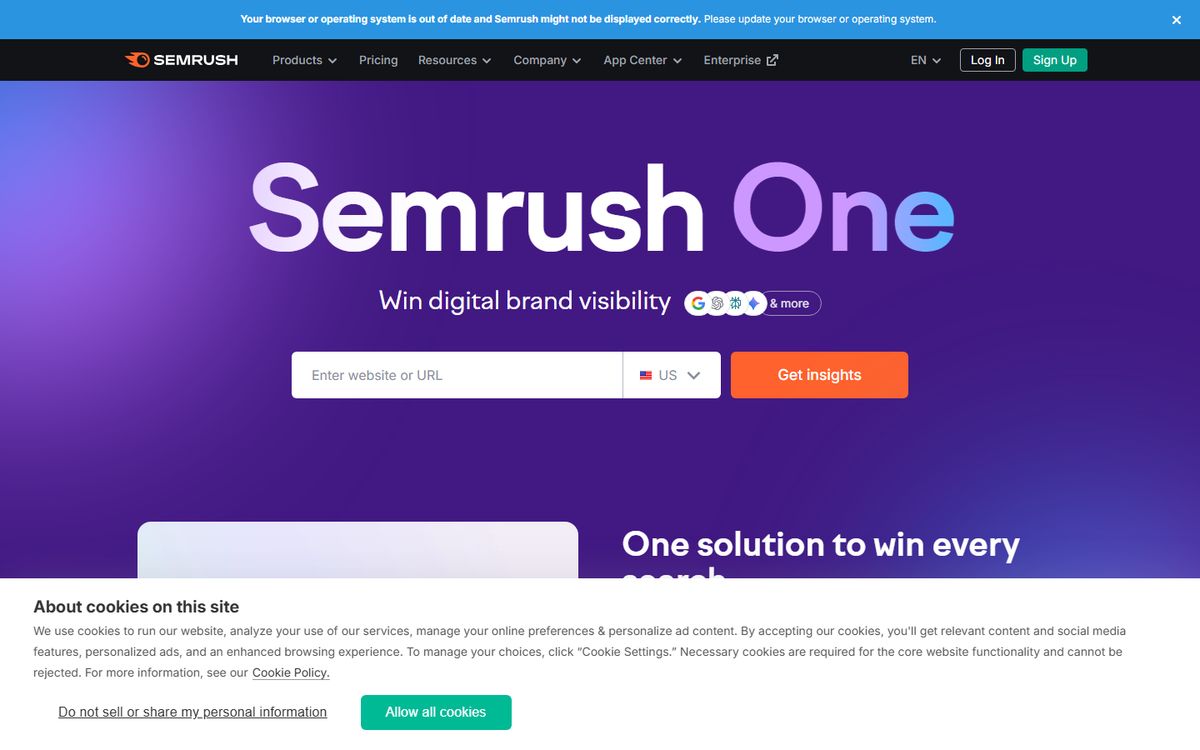
The pillar structure: Semrush runs what is arguably the most comprehensive digital marketing content hub:
- Main topics: SEO, content marketing, PPC, social media, competitive research -- each with pillar pages
- Depth: Each pillar has 20-50+ cluster posts
- Free tools: Dozens of free SEO and marketing tools that rank for tool-specific keywords
- Academy: The Semrush Academy with 20+ courses and certifications
What makes it work: Semrush competes across the entire digital marketing knowledge space, not just SEO. Their strategy is to be visible at every stage of every marketing practitioner's learning journey.
The scale advantage: Semrush's content operation produces more content than any competitor can match. This volume combined with distribution through a large existing audience (6M+ users) creates a compounding advantage.
The limitation: Scale without editorial quality produces thin content. Semrush has faced criticism for publishing too much content too quickly, diluting quality. The lesson from Semrush's challenges is that pillar content requires editorial quality enforcement, not just volume.
The lesson: A large-scale hub strategy requires strict quality gates. Volume helps until it hurts -- when quality drops, engagement metrics decline and rankings follow.
8. Drift -- The Conversational Marketing Hub
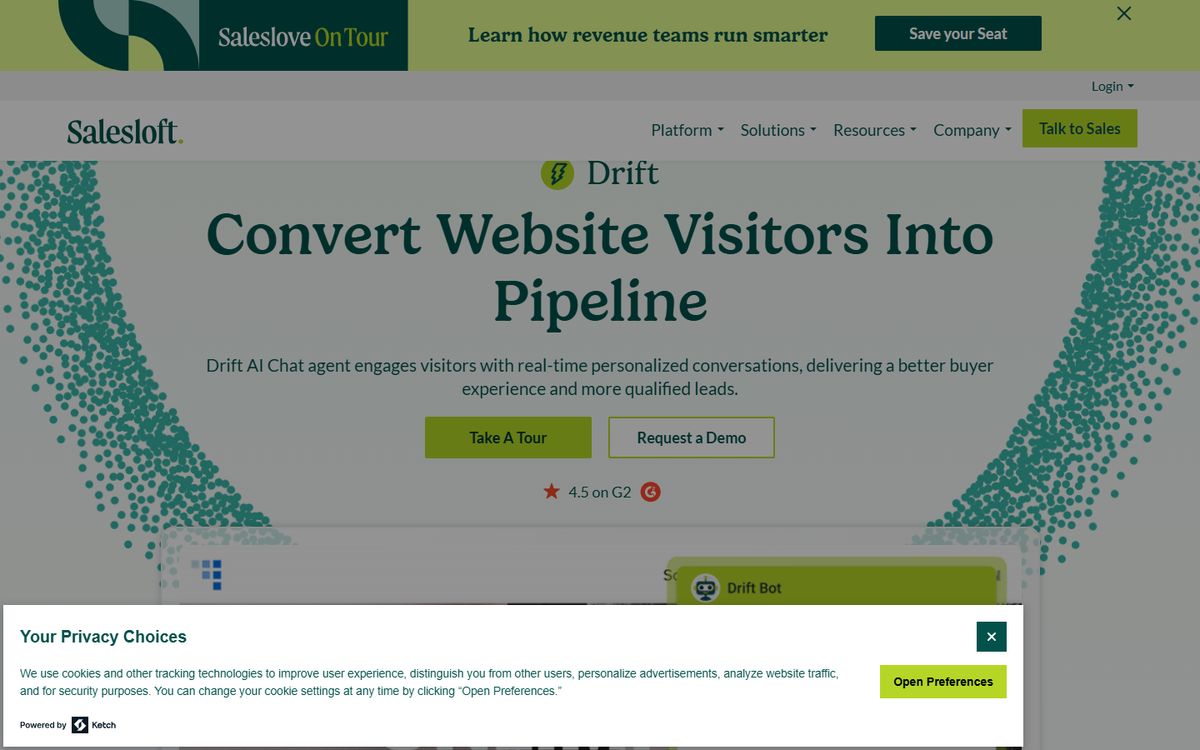
The pillar structure: Drift's content hub was built explicitly to define and own the "conversational marketing" category:
- Category pillar: "What is Conversational Marketing? The Complete Guide"
- Tactic cluster: "How to use chatbots for marketing," "live chat best practices," "conversation design"
- Role-specific content: Hubs for marketing leaders, sales leaders, and customer success
- Book/course: "Conversational Marketing" book and associated academy content
What makes it work: The hub creates the category vocabulary before anyone can dispute who owns it. Every piece of content reinforces the "conversational marketing" frame, which Drift invented. Competitors can build similar products; they can't easily rank for a term that Drift defined.
The evolution: As Drift evolved to "Revenue Acceleration Platform," their hub strategy evolved to maintain category authority in the new positioning. Pillar hubs can be repositioned when the business strategy changes.
The lesson: Building a hub around a category you're inventing requires patience -- you're building search volume for terms that don't fully exist yet. But the reward is owning a conversation that competitors can't enter.
Ready to put this into practice?
Averi turns these strategies into an automated content workflow.
How to Build a Content Pillar That Actually Works
Step 1: Choose a topic at the right scope Too broad ("marketing") and you can't win. Too narrow ("email subject line A/B tests") and there's not enough search volume to justify the hub investment. The sweet spot is a topic that your ICP actively searches for across multiple query types. "Content marketing for startups" or "remote team management" are good examples.
Step 2: Map the full keyword universe Before writing a word, map out every keyword variation relevant to your topic. Use Ahrefs, SEMrush, or Google's keyword data to identify:
- Head terms (short, high-volume: "content marketing")
- Long-tail variants ("content marketing for B2B startups")
- Question-based queries ("how do I create a content marketing strategy?")
- Related subtopics (distribution, analytics, content types, tools)
Step 3: Architect the hub structure Assign each keyword to a content type:
- Head term -- Main pillar page
- Major subtopics -- Tier 2 pillar pages
- Specific questions and tactics -- Cluster blog posts
- Definitions and terminology -- Glossary entries
- Tools and templates -- Resource downloads
Step 4: Build the pillar page first The pillar page establishes the hub architecture. Write it comprehensively (3,000-5,000 words), organize it around your key H2s (which become the titles of your cluster posts), and link to placeholder cluster content as you publish it.
Step 5: Create cluster content systematically Publish cluster content in a priority order based on keyword difficulty and search volume. Start with lower-competition cluster posts to build early wins, then tackle higher-competition topics as your domain authority grows.
Further Reading
Frequently Asked Questions
How many cluster posts do you need for an effective pillar?
There's no magic number, but 8-15 cluster posts typically creates sufficient topical authority to help your pillar rank. More is usually better. The most authoritative hubs (Ahrefs, HubSpot) have 30-50+ cluster posts for major pillar topics.
How long should a pillar page be?
Long enough to be the most comprehensive overview of the topic available. For most B2B topics, that's 3,000-5,000 words. The pillar page doesn't need to exhaustively cover every subtopic (that's what cluster posts are for), but it should give readers a complete orientation to the topic.
Should you build multiple content pillars simultaneously?
No. Build one pillar completely before starting another. A fully developed pillar with 15+ cluster posts will outrank three half-built pillars in terms of both authority and traffic. Depth beats breadth every time in content.
How do you know if your content pillar is working?
Track these metrics 90-180 days after building out your pillar:
- Organic traffic to the pillar page (trending up?)
- Average position for your primary keyword (moving toward page 1?)
- Number of keywords the pillar page ranks for (expanding coverage?)
- Internal pages per session (are visitors exploring the cluster?)
Can I repurpose a content pillar into other formats?
Absolutely, and you should. A content pillar is a comprehensive knowledge base on a topic -- it can become a course, a book, a webinar series, an email sequence, or a social media content series. The research and structure you build for the pillar supports content production across every channel.
Explore More
- 📋 Template: Content Pillar & Topic Cluster Template
- 📋 Template: Pillar Page Template
- 📖 Guide: How to Create Pillar Content That Dominates Search
- 📖 Definition: What Is a Content Pillar?
- 📖 Definition: What Is a Pillar Page?
Related from our blog
AI-Powered SEO for B2B SaaS: Getting to Page 1 Without an Agency →
How startups are using AI to compete with enterprise SEO budgets.
Programmatic SEO for B2B SaaS: The Complete 2026 Playbook →
Scale your organic traffic with programmatic content at startup speed.
Google AI Overviews: How to Get Featured in 2026 →
Optimize your content for AI-generated search results.
From the Averi Blog
Start Your AI Content Engine
Ready to put this into practice? Averi automates the hard parts of content marketing — so you can focus on strategy. Join 1,000+ teams already using Averi.
Related Resources

Content Pillar & Topic Cluster Template
Build topical authority with structured content pillars. Map pillar pages to cluster content, internal links, and keyword coverage for maximum SEO impact.

Pillar Page Template
Build topical authority with comprehensive pillar pages. This template covers structure, internal linking, table of contents, sub-topic coverage, and update cadence.

Internal Linking Strategy Template
Build a strategic internal linking structure. This template helps you map topic clusters, identify orphan pages, plan anchor text, and track link equity distribution.

SEO Content Marketing: The Complete Guide for 2026
Master SEO content marketing from keyword research and on-page optimization to link building and topical authority.

Publish SEO Content at Scale Without Sacrificing Quality
Dominate your niche with consistent, high-quality SEO content. Averi researches, writes, and optimizes articles that rank — week after week.

AI-Powered SEO Content That Actually Ranks
Not all AI content ranks. Learn how Averi combines keyword research, topical authority, and E-E-A-T signals to produce SEO content that earns top positions.