
Best Product Launch Content Examples
Study 10 product launches that nailed their content strategy. Covers announcement posts, launch sequences, social campaigns, and email marketing with results.
💡 Key Takeaway
Study 10 product launches that nailed their content strategy. Covers announcement posts, launch sequences, social campaigns, and email marketing with results.
A product launch is not a single moment -- it's a content campaign. The difference between a launch that creates momentum and one that disappears into the noise is usually whether the team treated it as a coordinated content campaign across multiple channels or as a single announcement that went out on one day.
These 10 real product launch examples show what a well-executed launch looks like in practice, across different stages, different channels, and different product types.
1. Notion -- The AI Features Launch (2023)
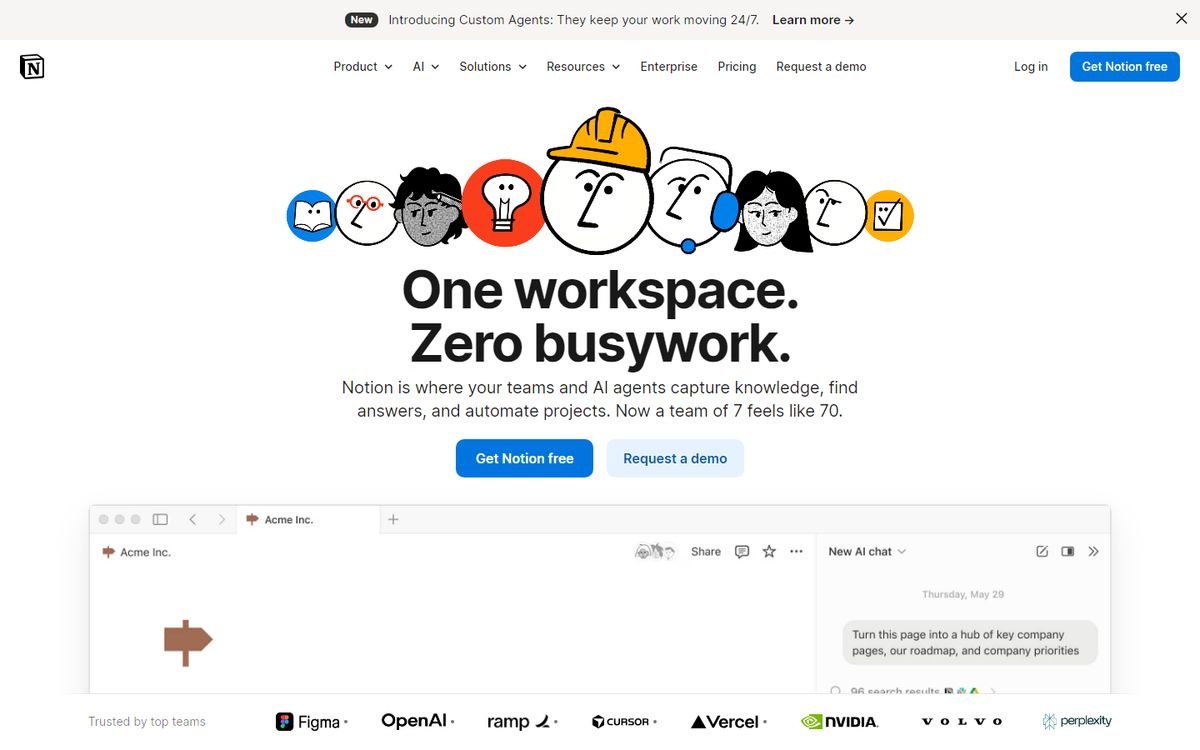
The launch: Notion AI -- an AI writing assistant built directly into the workspace -- launched to a massive user base with enormous expectations.
What they did right: Notion's launch was a coordinated multi-channel campaign that ran for weeks, not a single announcement. Before launch day, they ran a waitlist with early access -- this created anticipation and a ready-made first cohort of users. The waitlist itself generated media coverage ("Notion building AI into its workspace").
Launch day content included: a launch blog post that was less about features and more about the philosophy behind the product ("we want to help you think, not think for you"), a YouTube video demonstrating specific use cases (not a feature tour -- real workflows), and an email to all users with one-click activation.
Post-launch, they leaned heavily on user-generated content -- sharing examples of how users were incorporating Notion AI into their work. The community became the marketing team.
The lesson: The waitlist-launch-community cycle is the modern launch playbook for product-led companies. Generate anticipation -- deliver a great Day 1 experience -- let users create the follow-on content.
2. Stripe -- New Product Launches (Stripe Climate, Stripe Atlas)
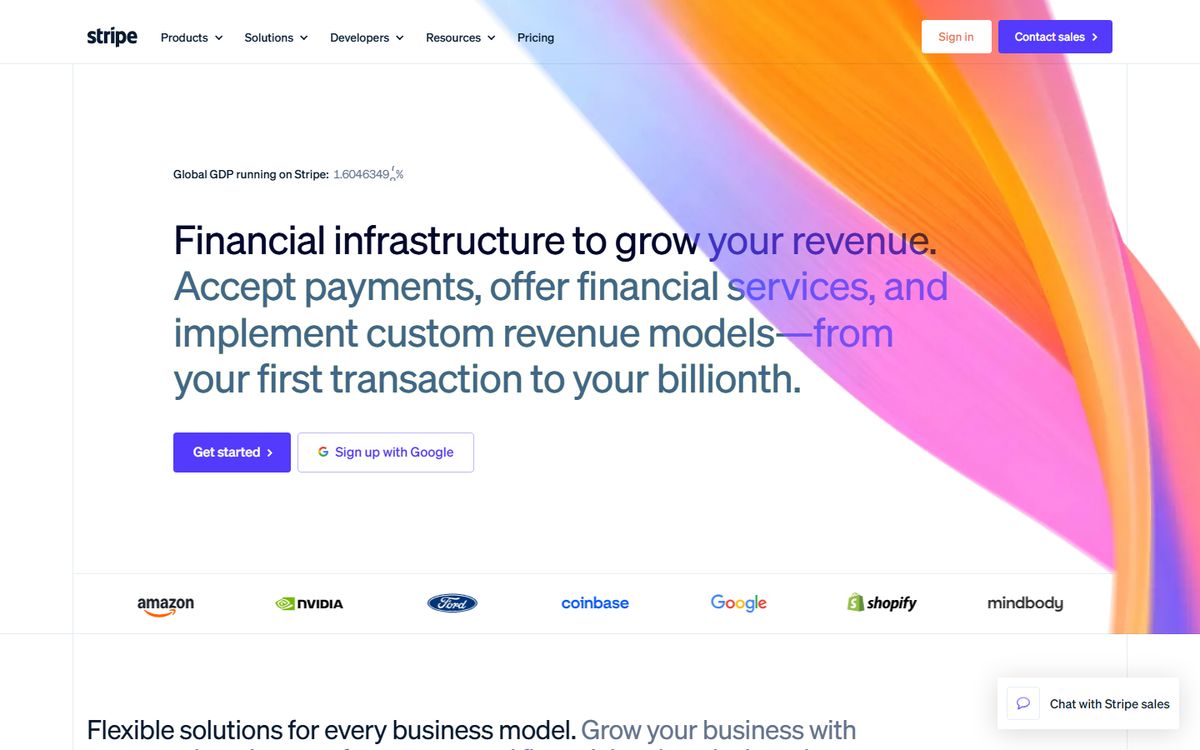
The launch approach: Stripe's product launches are notable for their depth of explanation. When they launched Stripe Climate (which lets businesses direct a portion of revenue to carbon removal), they published a 3,000-word explainer not about the product's features, but about the science and economics of carbon removal, why it matters, and why Stripe built this.
What they did right:
- Lead with the "why": Stripe assumes their audience is intelligent and curious. They explain the reasoning behind product decisions at a depth that no competitor matches.
- Long-form launch content: Each major Stripe launch has a long blog post explaining the problem, the solution, and the thinking. These posts become the foundation for all secondary coverage.
- Founder-led PR: Patrick and John Collison write directly. When a Stripe launch includes a quote from Patrick Collison about the company's thinking, it generates significant media interest.
The lesson: Launch content that explains the "why" at depth generates more trust and media pickup than feature-focused announcement copy.
Averi automates this entire workflow
From strategy to drafting to publishing — stop doing it manually.
3. Linear -- The "Speed" Launch Series
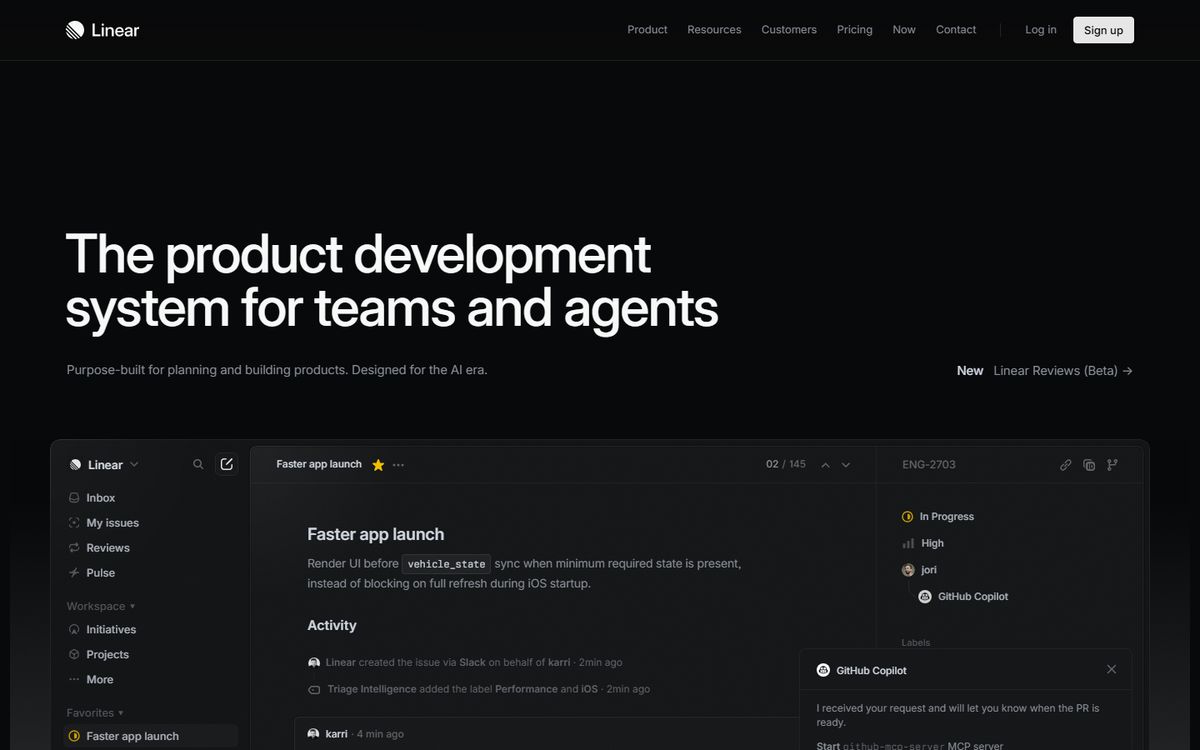
The launch approach: Linear regularly publishes what they call "essays" as part of their product launches -- philosophical arguments about how software development tools should work. Their launch of a new speed-focused feature was accompanied by an essay on why speed is a moral virtue in software tools, not just a nice-to-have.
What they did right:
- Essay-length product philosophy: Each major Linear launch includes long-form writing that positions the feature within Linear's product philosophy. This creates a narrative context that pure feature announcements lack.
- Developer community targeting: Linear shares launches on Hacker News as "Ask HN" or "Show HN" posts, which drives significant technical audience engagement and backlinks.
- Roadmap as marketing: Linear publicly shares roadmap items in their changelog, creating anticipation for upcoming launches weeks before they happen.
The lesson: For technical products, launching to Hacker News and developer communities requires genuine substance -- not marketing copy. Technical launches earn engagement by being technically interesting, not by being well-promoted.
4. Figma -- FigJam Launch (2021)
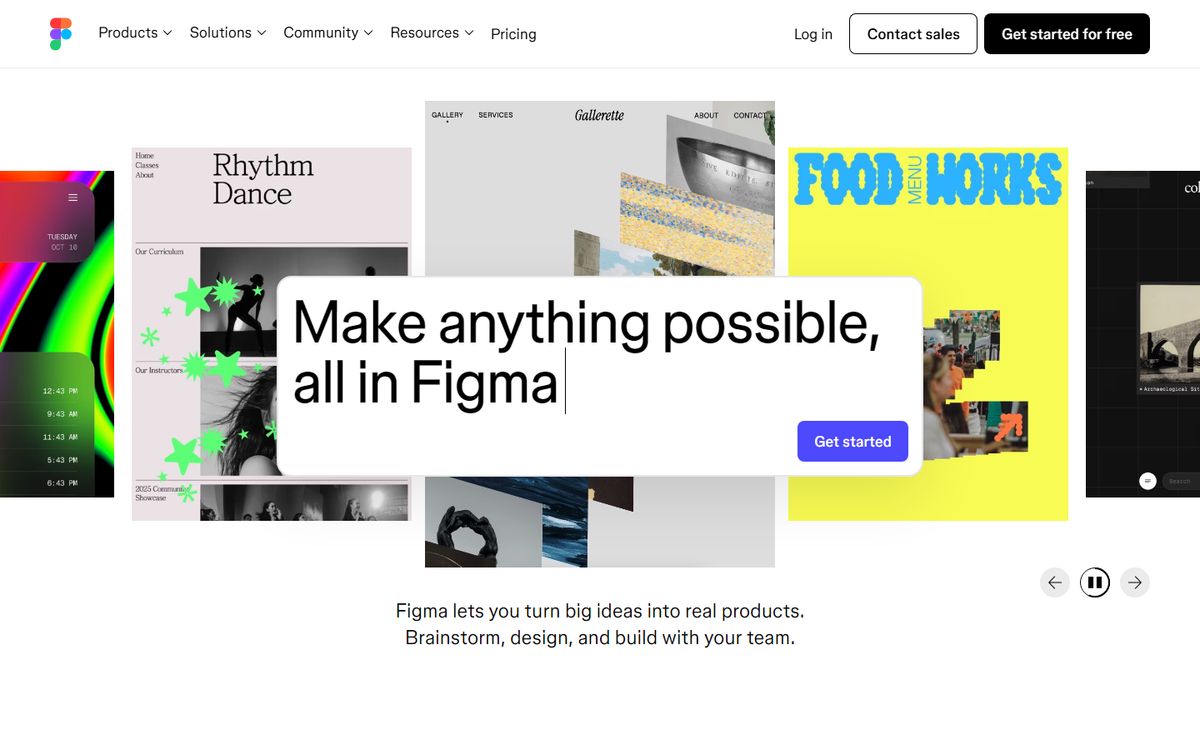
The launch: FigJam (Figma's collaborative whiteboard tool) launched at Config 2021, Figma's annual design conference.
What they did right:
- Conference as launch platform: Launching at their own conference gave Figma a captive, excited audience of designers who were already invested in the Figma ecosystem. The conference content was effectively a launch campaign.
- Interactive demos: Figma invited attendees to participate in live FigJam sessions during the conference, creating "I tried it and it's great" word-of-mouth simultaneously with the announcement.
- Creator program at launch: Figma engaged design influencers and educators to publish FigJam tutorials on the same day as launch, giving the product immediate social proof and distribution.
The lesson: Launching at your own event creates a captive, motivated audience for your announcement. If you have an annual conference or summit, it's the ideal launch venue.
5. Loom -- "Video Messages for Work" Rebrand Launch
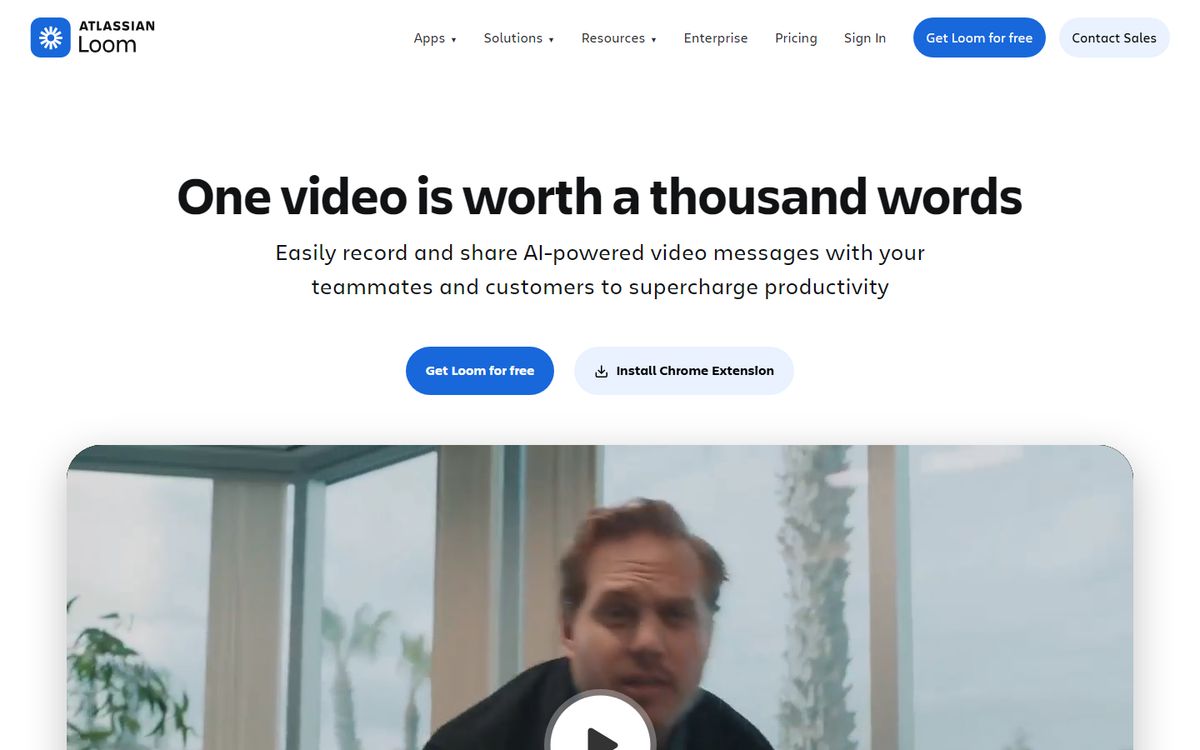
The situation: Loom needed to reframe themselves from "screen recording tool" to "video messaging platform" as their use cases expanded beyond screen capture.
What they did right:
- Narrative reframe as launch: A positioning shift can be a launch event. Loom treated their category reframe as a product launch with full campaign support: new homepage, launch video, email campaign, and targeted PR.
- Data to support the story: Loom released usage data ("Loom messages are 4x more likely to get a response than text") alongside the rebrand, giving media and users a compelling hook.
- Customer stories as proof: They launched simultaneously with 5-6 customer stories from different industries (sales, education, customer success) showing how "video messaging" worked in practice.
The lesson: A positioning shift deserves as much launch investment as a product feature launch. The story you tell about your product matters as much as what the product does.
Build your content engine with Averi
AI-powered strategy, drafting, and publishing in one workflow.
6. Webflow -- Webflow 4.0 Launch
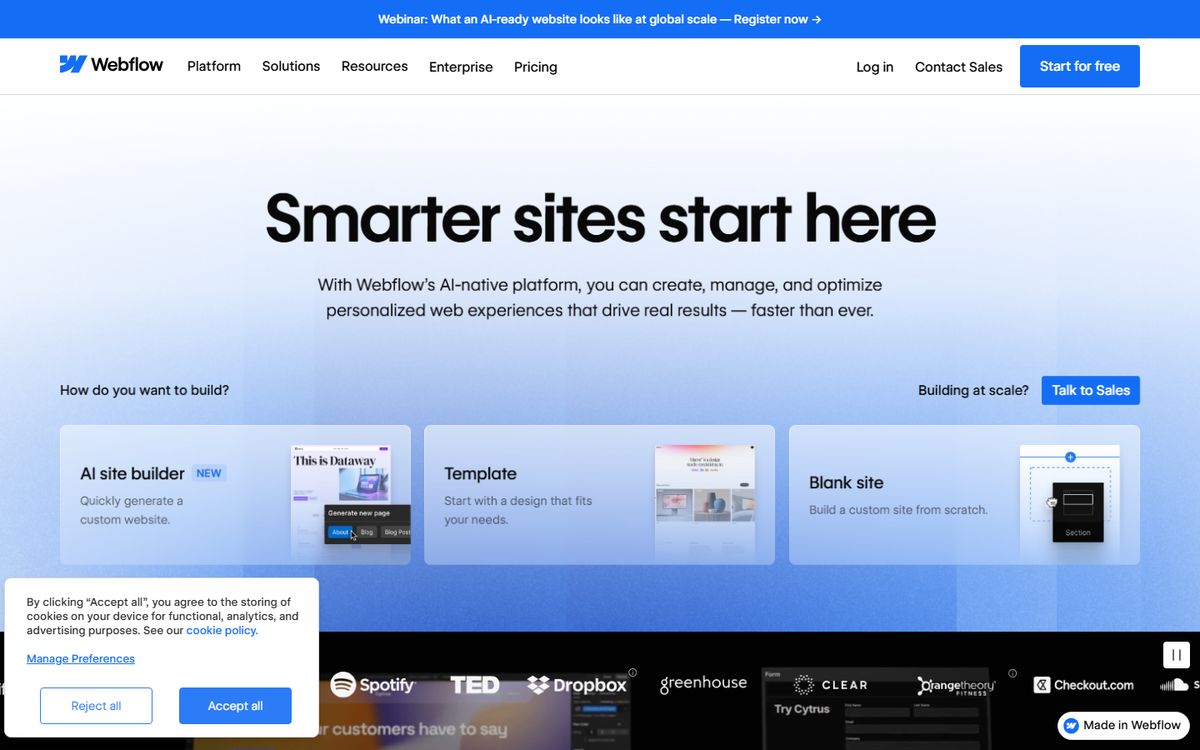
The launch approach: Webflow's major version launches are treated as platform events with multi-week build-up. The Webflow 4.0 launch included a dedicated campaign site, pre-launch blog posts teasing specific features, a launch day livestream, and a community voting mechanism for future feature prioritization.
What they did right:
- Campaign microsite: A dedicated launch site separate from the main site creates a focused experience for the launch period and can be promoted independently.
- Pre-launch content series: Webflow published 4-5 blog posts in the weeks before launch, each focusing on a specific new capability. This drip of pre-launch content builds anticipation and earns backlinks before the main event.
- Community participation: Webflow involves their community (forum members, social followers) in the launch through early access, feedback sessions, and voting on priorities. This creates invested advocates who promote the launch organically.
The lesson: Pre-launch content drips build more anticipation than a single launch-day announcement. Give your audience something to look forward to.
7. Superhuman -- The "Fastest Email Ever" Launch
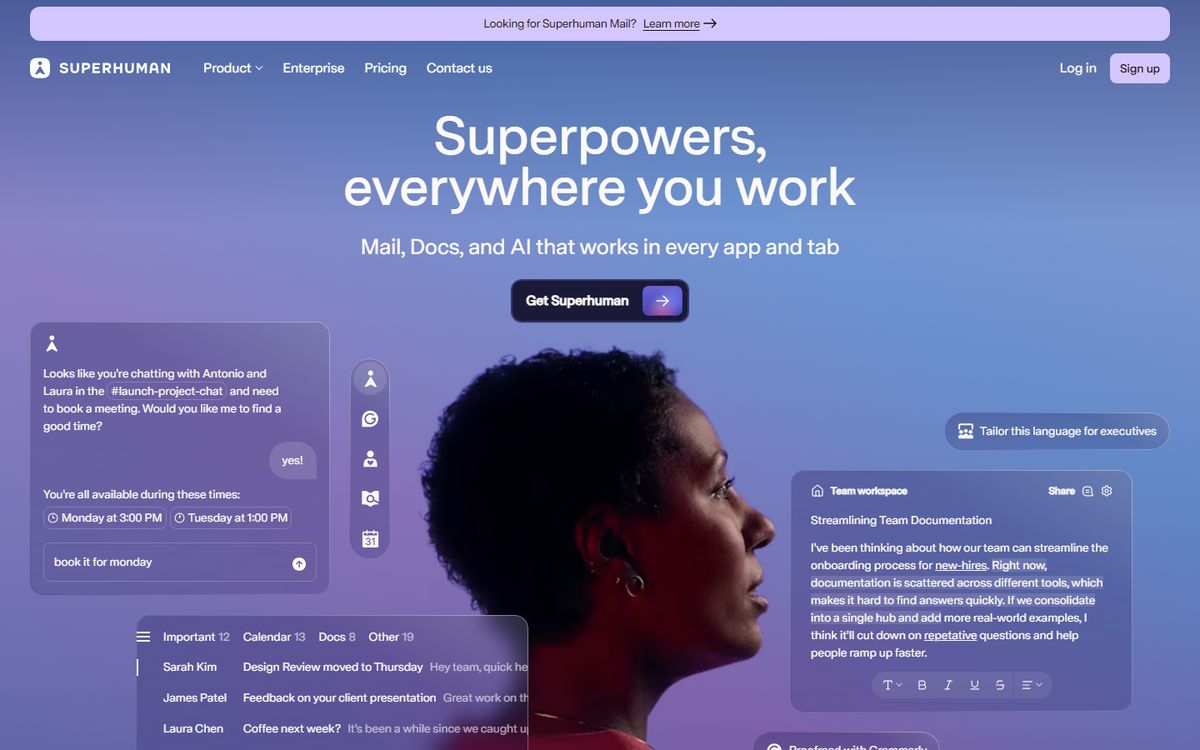
The launch approach: Superhuman launched in 2016 with a deliberately limited rollout -- invite-only, waitlist-driven, with a concierge onboarding process for each new user. The scarcity was the launch strategy.
What they did right:
- Scarcity as positioning: The invite-only model made Superhuman desirable before most people had tried it. "I'm on the Superhuman waitlist" became a status signal in tech communities.
- Concierge onboarding as content: Every new user received a 30-minute personal onboarding session with the Superhuman team. This created word-of-mouth from users who said they'd never felt so well set up with a new product.
- Founder-as-media: CEO Rahul Vohra wrote transparently about Superhuman's product development process on Medium, creating a launch narrative months before the product was widely available.
The lesson: Scarcity and exclusivity are legitimate launch strategies for early-stage products. A controlled rollout creates demand and allows you to deliver a premium onboarding experience that drives word-of-mouth.
8. Canva for Teams -- Enterprise Launch Campaign
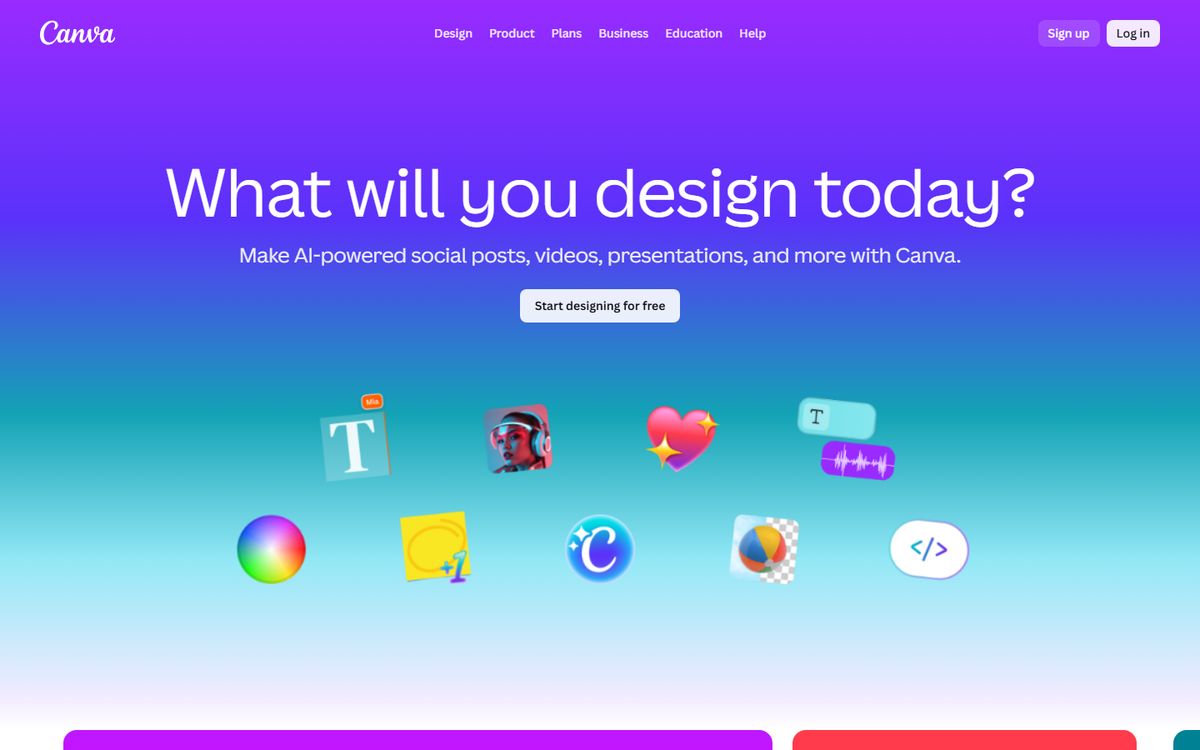
The launch approach: Canva's launch of Canva for Teams targeted a new audience (enterprise marketing and design teams) with a campaign built around the specific pain points of team design workflows.
What they did right:
- ICP-specific campaign content: Rather than announcing features, Canva created content specifically for the Enterprise buyer persona (marketing directors, creative team leads) about the specific pain of maintaining brand consistency across large teams.
- Case studies at launch: Canva launched with 10+ enterprise customer case studies ready to publish simultaneously, providing social proof immediately.
- Channel-specific messaging: The enterprise launch targeted LinkedIn (for professional audience reach), email (for existing Canva users with teams), and PR (targeting marketing trade publications).
The lesson: Enterprise launches require a different content approach than consumer launches. B2B buyers need proof (case studies, ROI calculations) not just features.
Ready to put this into practice?
Averi turns these strategies into an automated content workflow.
9. Basecamp -- The Launch-as-Manifesto Approach
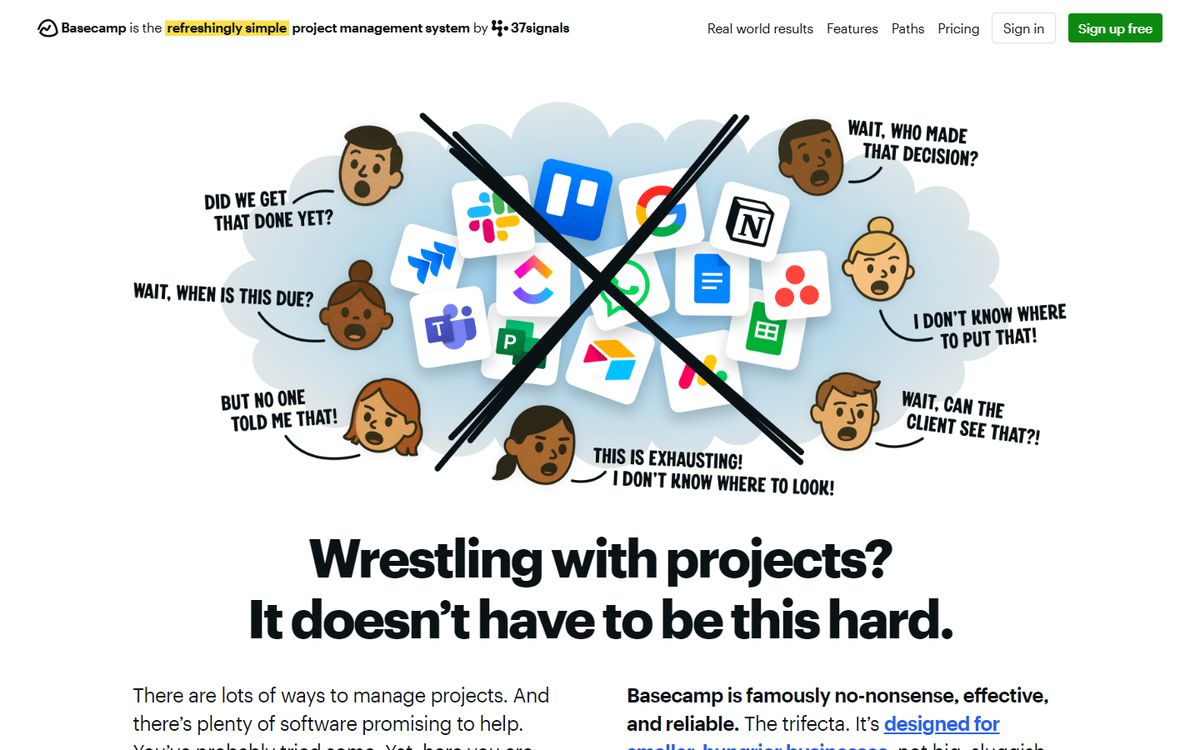
The approach: Basecamp (now 37signals) has a tradition of launching products alongside manifestos -- long-form philosophical documents about why the product was built, what the team believes about work, and what problem they're solving. "Getting Real," "REWORK," and their various product launch posts are all in this tradition.
What they did right:
- Long-form philosophy as PR: A product manifesto generates more media coverage than a product announcement. Journalists can write about the ideas, not just the product.
- Provocative positioning: Basecamp's launch content consistently takes positions that are easy to disagree with ("meetings are toxic," "VC funding is overrated"). This generates controversy, which generates attention.
- Free books as launch artifacts: Basecamp releases free versions of their books alongside major product launches, driving email captures and establishing thought leadership.
The lesson: A product launch is an opportunity to make a statement about your beliefs. Launches that are only about features are forgettable. Launches that are about ideas are remarkable.
10. Product Hunt -- The Daily Launch Show
The meta example: Product Hunt itself is a launch platform, but their most successful launches have consistent characteristics that startups can learn from.
What the best PH launches share:
- Maker comments: The founding team engages actively in the comments on launch day -- answering questions, sharing context, expressing genuine excitement. Passive launches without maker engagement perform significantly worse.
- Launch day specific content: The top PH launches include a dedicated launch day blog post, a YouTube demo video, and social posts from the founder with a personal message about why they built it.
- Pre-launch list building: Successful launches pre-recruit supporters who will upvote and comment on the first hour of the launch. The first hour determines the day's ranking.
- Follow-up narrative: The best PH launches include a follow-up post 24-48 hours later: "We launched on Product Hunt yesterday -- here's what we learned."
The lesson: Product Hunt launches reward active engagement and community participation. Treat your PH launch day as a live community event, not a content publish.
The Four-Phase Launch Framework
Looking across these examples, successful product launches follow a four-phase structure:
Phase 1: Pre-launch (3-4 weeks before)
- Waitlist or early access campaign
- Teaser content (problem-focused, not feature-focused)
- Press outreach with embargoed briefings
- Creator/influencer early access recruitment
Phase 2: Launch week
- Launch day hero content (blog post, launch video, social)
- PR push with ready-made story angles
- Email campaign to existing users
- Community activation (PH, HN, Reddit, Slack communities)
Phase 3: Post-launch (2-4 weeks after)
- User success stories and early use cases
- Feature-specific deep dives
- Founder reflection post ("Here's what happened on our launch")
- Customer case studies as they develop
Phase 4: Sustain
- Monthly changelog communication
- Ongoing case study publishing
- Feature education content as new users discover older capabilities
Further Reading
Frequently Asked Questions
How far in advance should you plan a product launch?
For major feature launches or new product launches: 4-6 weeks minimum. For significant version updates: 2-3 weeks. The pre-launch content (teaser posts, early access recruitment) requires at least 2-3 weeks to generate meaningful anticipation.
Should you launch on Product Hunt?
It depends on your audience. Product Hunt is excellent for developer tools, productivity apps, and consumer SaaS. It's less effective for enterprise B2B products where buyers aren't hunting on PH. For the right product category, a top-10 PH launch can drive 1,000-5,000 signups in a day.
How do you create buzz before launch without revealing too much?
Focus pre-launch content on the problem you're solving, not the solution. "Teams waste 40% of their meeting time on updates that could be async" builds anticipation without revealing features. Let people self-identify with the pain before you reveal the product.
What's the most common launch content mistake?
Writing about features instead of outcomes. Nobody gets excited about "new dashboard analytics with customizable filters." People get excited about "see which content is actually driving pipeline, in 30 seconds." The feature is the same; the framing is completely different.
How do you maintain launch momentum after the initial announcement?
Commit to a 30-day post-launch content cadence: one user story, one use-case deep dive, or one "how we built this" post per week. The launch day is a spike; the weeks after are where product-market fit gets validated through sustained engagement.
Explore More
- 📋 Template: Product Launch Blog Post Template
- 📋 Template: Product Update Email Template
- 📖 Definition: What Is Product-Led Content?
- 📖 Definition: What Is Product-Market Fit?
Related from our blog
How to Build an AI Content Engine That Grows Your Startup →
Build a system that turns strategy into published content.
The 2026 Startup Content Playbook →
Budget-specific content strategies for every stage.
Content Marketing ROI: Real Numbers from Real Founders →
Actual ROI data from startups investing in content.
From the Averi Blog
Start Your AI Content Engine
Ready to put this into practice? Averi automates the hard parts of content marketing — so you can focus on strategy. Join 1,000+ teams already using Averi.
Related Resources

Product Launch Blog Post Template
Announce product launches that generate buzz. Includes announcement post template, feature deep-dive format, and launch sequence blog plan.

Go-to-Market Strategy Template
Plan your GTM strategy from positioning to launch. Covers market analysis, ICP definition, channel strategy, pricing, messaging, and launch timeline.

Marketing Campaign Planning Template
Plan campaigns from brief to launch with this comprehensive template. Covers objectives, audience, channels, timeline, budget, assets, and success metrics.

Best SaaS Blog Post Examples (With Analysis)
Study 15 exceptional SaaS blog posts and learn what makes them rank, convert, and engage. Includes structure analysis, SEO breakdown, and takeaways you can steal.
Best Startup Landing Page Examples (With Breakdown)
Study 12 high-converting startup landing pages. Full breakdown of headlines, value props, social proof, CTAs, and design patterns that drive signups.

Best Content Marketing Strategy Examples from Startups
See how 10 startups built content engines that drove real growth. From HubSpot to Notion to Buffer — full strategy breakdowns with metrics and lessons.