
Best SaaS Blog Post Examples (With Analysis)
Study 15 exceptional SaaS blog posts and learn what makes them rank, convert, and engage. Includes structure analysis, SEO breakdown, and takeaways you can steal.
💡 Key Takeaway
Study 15 exceptional SaaS blog posts and learn what makes them rank, convert, and engage. Includes structure analysis, SEO breakdown, and takeaways you can steal.
The difference between a SaaS blog that generates pipeline and one that just exists is not the number of posts or the quality of writing -- it's the strategy behind each piece. The best SaaS blogs understand their ICP deeply, pick keywords with commercial intent, structure content to capture leads, and build a compounding library of content that works while the sales team sleeps.
Here are 15 real SaaS blog posts, analyzed for what specifically makes them work.
1. HubSpot -- "How to Write a Marketing Plan"
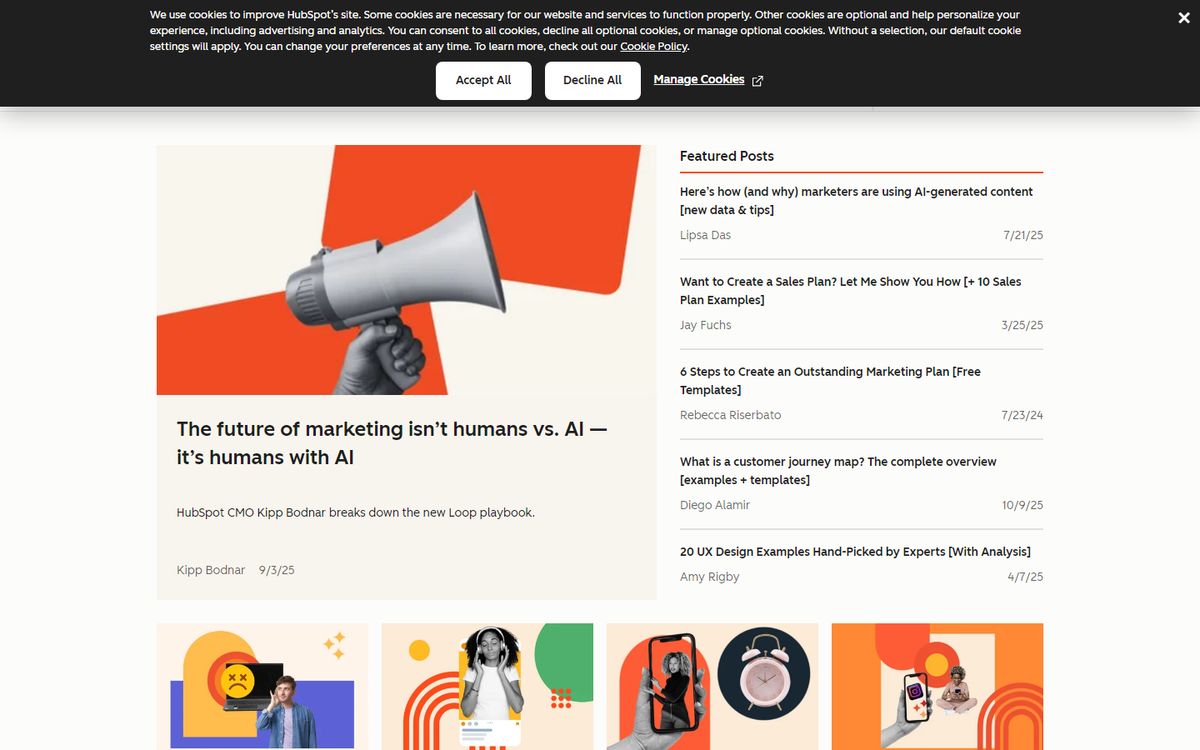
URL: hubspot.com/marketing/how-to-write-a-marketing-plan
Estimated monthly organic traffic: 85,000+
HubSpot's marketing plan guide is a masterclass in long-tail keyword targeting combined with lead capture. The piece targets a moderately competitive keyword (KD ~55) but wins because it's genuinely the most comprehensive resource on the topic -- 4,000+ words with downloadable templates embedded as gated CTAs.
What makes it work:
- Free template CTA: The primary call to action isn't "try HubSpot" -- it's "download the free marketing plan template." The template requires an email, which feeds the HubSpot CRM. This is content as lead gen at its most elegant.
- Structured for scanning: H2s that map directly to the reader's mental checklist ("What is a Marketing Plan?", "How to Write a Marketing Plan in 5 Steps", "Marketing Plan Examples"). Someone skimming can find exactly what they need.
- Internal linking: Every supporting concept links to another HubSpot resource. The post is a node in a web of content, not an isolated article.
The lesson: The best SaaS blog posts aren't trying to sell the product -- they're building an asset library that attracts buyers at the moment they're looking for help.
2. Ahrefs -- "How to Do Keyword Research for SEO"
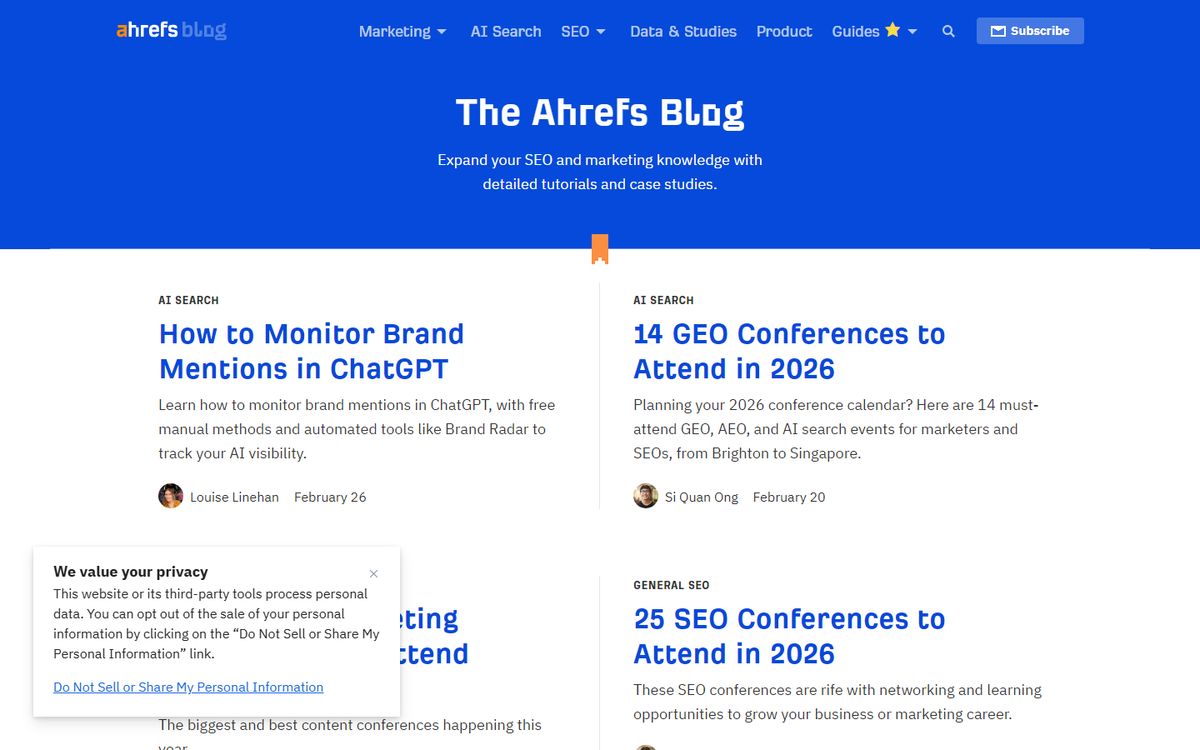
URL: ahrefs.com/blog/keyword-research
Estimated monthly organic traffic: 200,000+
This is the benchmark piece for tool-forward content marketing. Ahrefs ranks #1 for one of the most competitive informational keywords in SEO ("keyword research") by being the most educational, most detailed resource on the topic -- while seamlessly integrating their own tool throughout.
What makes it work:
- Tool integration as tutorial: Every step of the keyword research process is illustrated with screenshots from Ahrefs' own tool. The content teaches keyword research, and the method of teaching naturally positions Ahrefs as the tool you need.
- Original data: Ahrefs regularly updates the post with their own research ("we analyzed 1.9 billion keywords"). This builds authority and gives journalists/bloggers something to cite (which means backlinks).
- No-fluff promise kept: Ahrefs' blog has a house style of cutting marketing speak entirely. The tone is direct and technical, which builds trust with a technical audience.
The lesson: If your product is the solution to the problem you're writing about, show it working -- don't tell the reader it works.
Averi automates this entire workflow
From strategy to drafting to publishing — stop doing it manually.
3. Intercom -- "What is a Chatbot?"
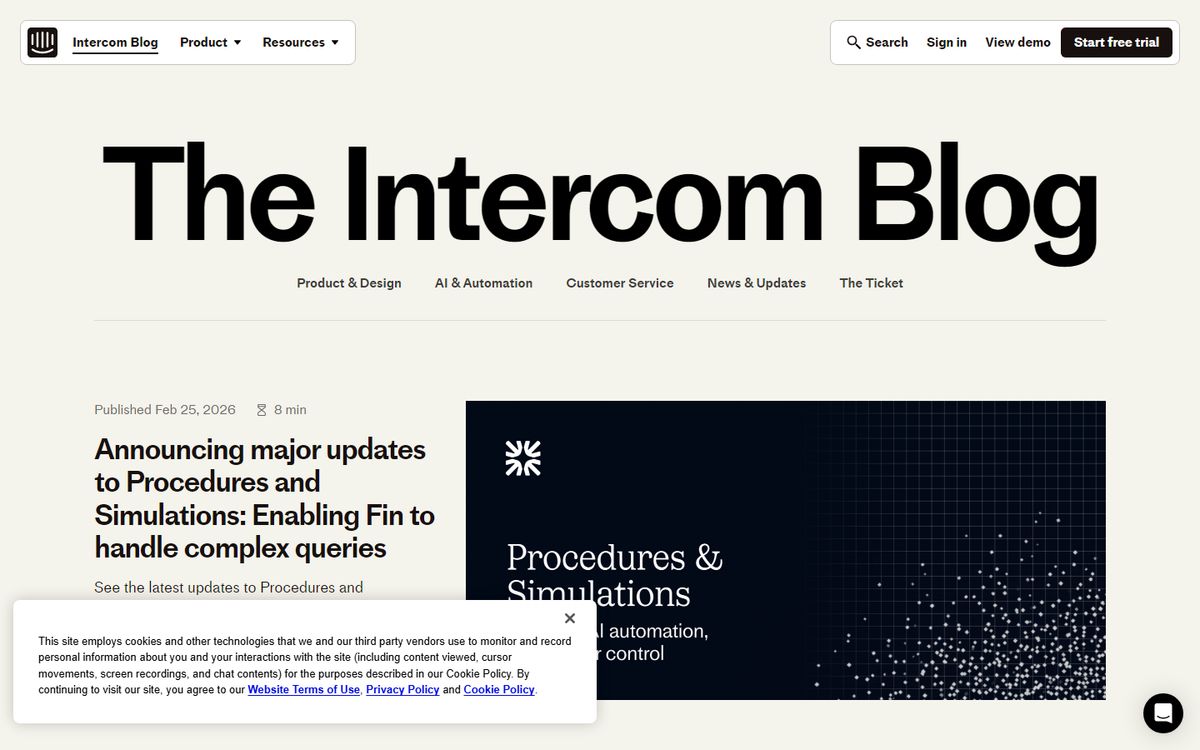
URL: intercom.com/blog/what-is-a-chatbot
Estimated monthly organic traffic: 45,000+
Intercom targets high-volume definitional keywords as top-of-funnel content. "What is a chatbot?" is searched by people at the very beginning of their buying journey -- early enough that Intercom can shape their understanding of the category and subtly position their product as the natural choice.
What makes it work:
- Category education as brand positioning: The article doesn't just define chatbots -- it frames the chatbot landscape using Intercom's own vocabulary and product philosophy. By the end, readers understand chatbots through Intercom's lens.
- Strong visual design: Intercom invests in custom illustrations for their blog posts, which improves time-on-page, makes screenshots shareable, and signals brand quality.
- Conversion-aware sidebar: A persistent CTA to "Start a free trial" stays in the reader's peripheral vision throughout.
The lesson: Definitional/educational content is a category-ownership play. Write the authoritative resource on a topic and you shape how your market thinks about it.
4. Buffer -- "The Complete Guide to Social Media Marketing"
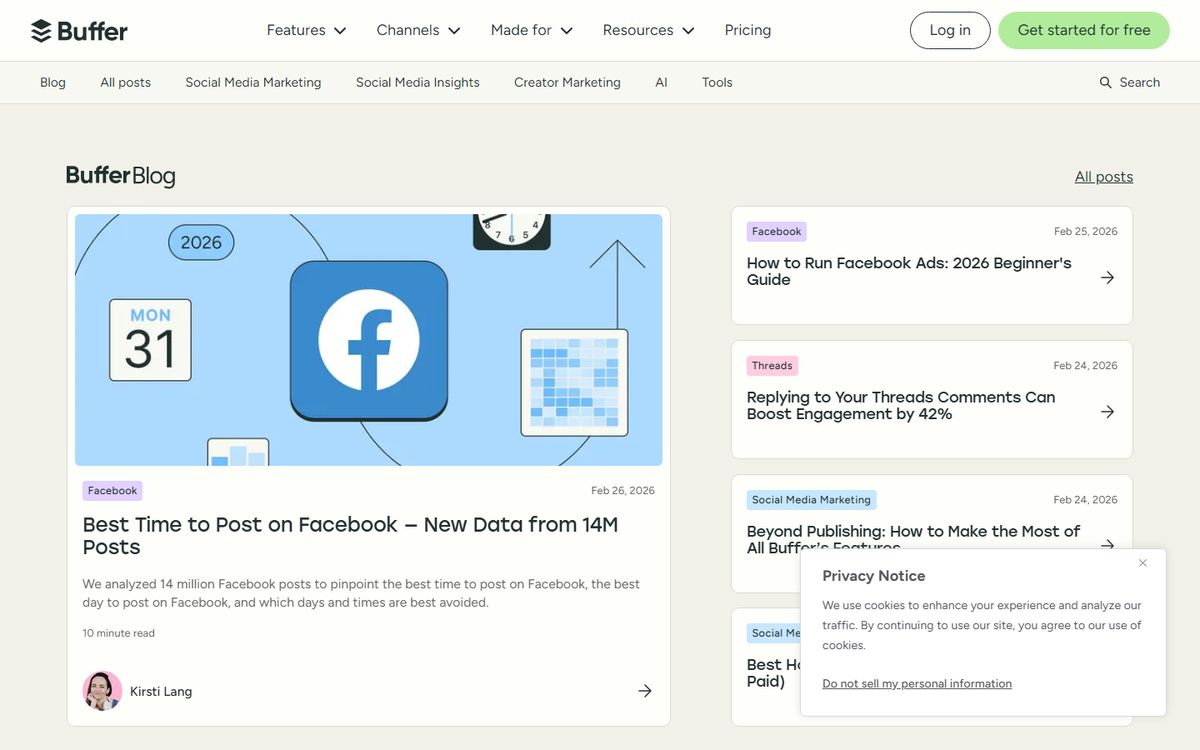
URL: buffer.com/resources/social-media-marketing-strategy
Estimated monthly organic traffic: 55,000+
Buffer's content strategy is built around being the most accessible, beginner-friendly resource for social media marketing. Their blog doesn't compete with Sprout Social on enterprise positioning -- it owns the "first marketing hire at a small company" persona.
What makes it work:
- ICP precision: Every piece of Buffer content is written for a specific reader: the small business owner or early-stage marketer figuring out social media for the first time. This precision makes the content feel personally relevant.
- Practical over theoretical: Buffer doesn't cite academic research -- they share their own social media data, experiments, and results. This builds trust and makes content more actionable.
- Free tools embedded: Links to Buffer's free publishing tools are integrated naturally as solutions to problems raised in the post, not bolted-on CTAs.
The lesson: Clarity about your ICP is more important than targeting the highest-volume keywords. Buffer could write for enterprise marketers but doesn't -- and that focus is what makes their content resonate.
5. Notion -- "How to Build a Second Brain in Notion"
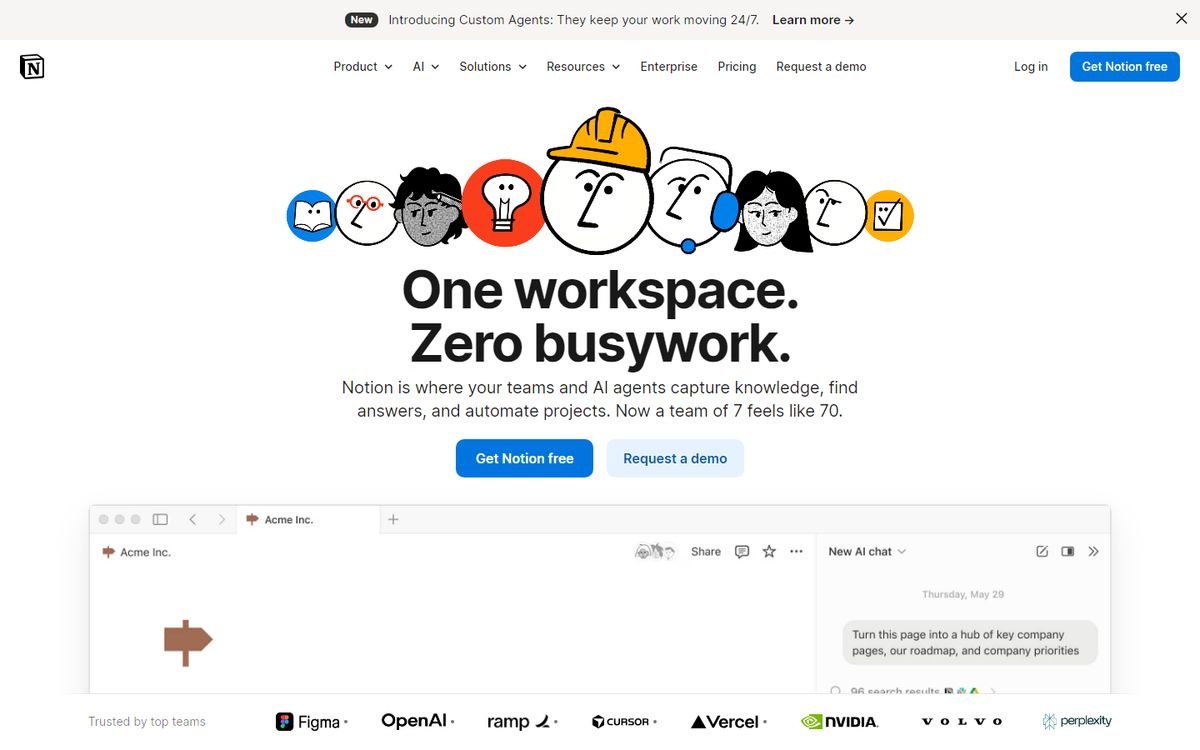
URL: notion.com/blog/second-brain
Estimated monthly organic traffic: 30,000+
This piece is a template-led strategy -- Notion targets queries from fans of the "Building a Second Brain" productivity framework, offering a Notion-specific implementation. It converts framework enthusiasts into Notion users.
What makes it work:
- Template as CTA: The post walks through a concept and ends with a downloadable Notion template that readers can duplicate into their own workspace. One click converts a reader into an active Notion user.
- Community alignment: By explicitly building on Tiago Forte's "Building a Second Brain" framework, Notion taps into an existing audience that already has evangelism habits.
- Search intent match: Someone searching for "second brain Notion" has strong intent to actually implement something -- this isn't a casual curious reader. The post is written for action.
The lesson: Find communities and frameworks adjacent to your product and build bridges. Their audience becomes your audience.
Build your content engine with Averi
AI-powered strategy, drafting, and publishing in one workflow.
6. Stripe -- "Payments Infrastructure for SaaS"
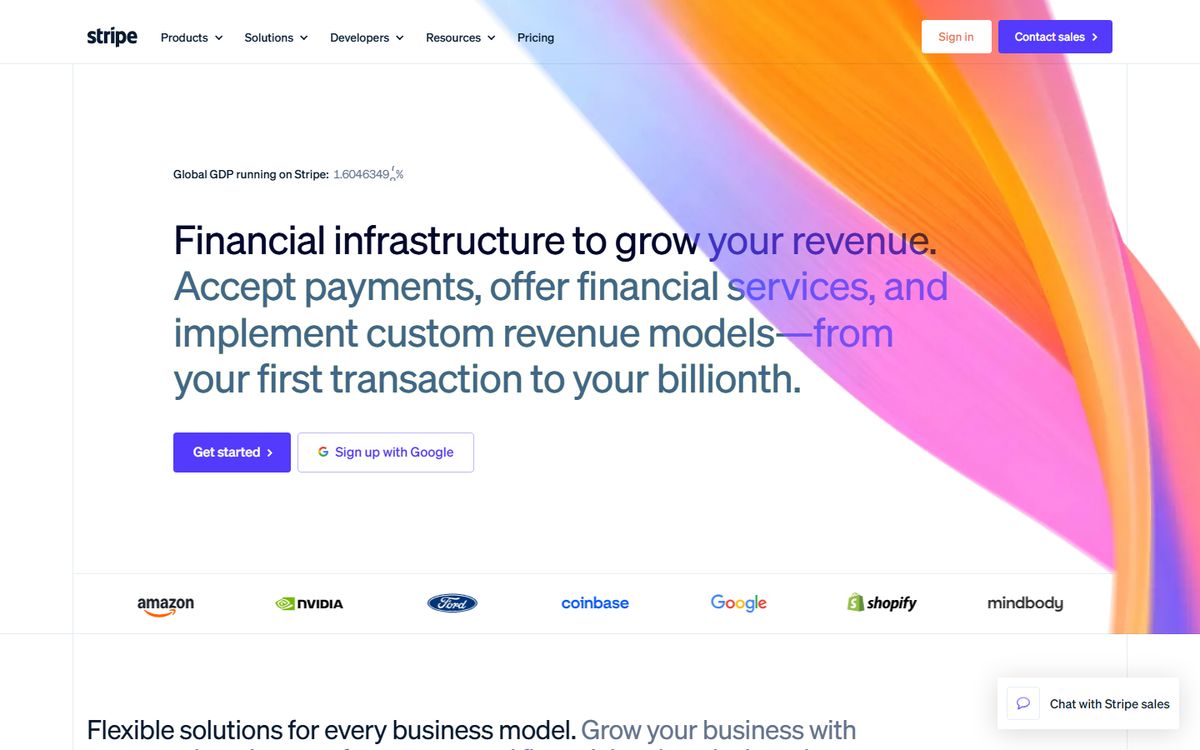
URL: stripe.com/resources/more/payments-infrastructure-saas
Estimated monthly organic traffic: 8,000+
Stripe's content is different from most SaaS blogs -- it targets extremely high-intent, low-volume keywords. "Payments infrastructure for SaaS" has a fraction of the search volume of "how to start a business" but attracts CTOs and engineering leaders making six-figure vendor decisions.
What makes it work:
- Long-form technical authority: Stripe's resources go deep on technical content that only a payment infrastructure company could credibly write -- PCI compliance, multi-currency billing, revenue recognition. This technical depth is itself a trust signal.
- Bottom-of-funnel intent: The readers finding this article are already sold on the concept; they're evaluating vendors. The content is designed for comparison and decision-making, not education from zero.
- Case studies integrated: Real customer examples (Shopify, Lyft, Salesforce) are woven into the content as proof points, not just testimonial boxes.
The lesson: Don't compete for everyone's attention. Compete for the attention of people who are ready to buy.
7. Calendly -- "Meeting Request Email Templates"
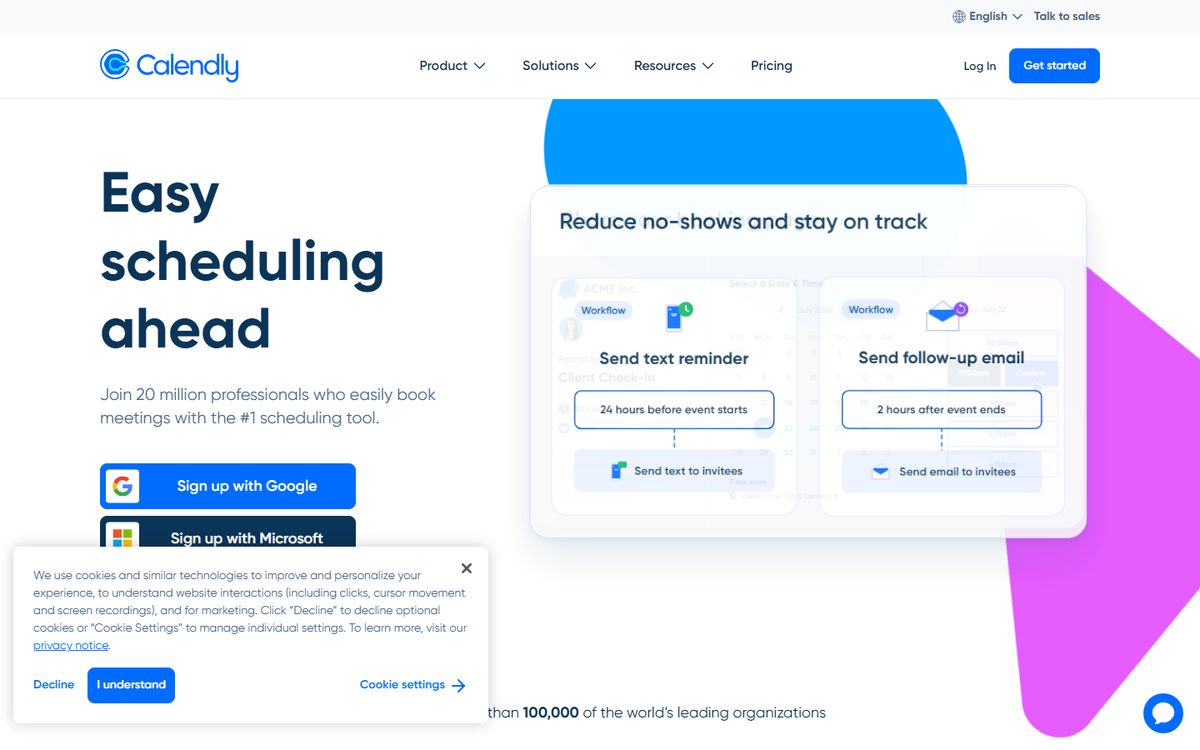
URL: calendly.com/blog/meeting-request-email-templates
Estimated monthly organic traffic: 120,000+
This is a beautiful example of adjacent-use-case content. People searching for email templates to schedule meetings aren't necessarily searching for scheduling software -- but they're absolutely the right audience for Calendly.
What makes it work:
- High-volume adjacent keyword: "Meeting request email template" gets enormous search volume. The content serves the query perfectly while positioning Calendly as the tool that eliminates the need for these emails entirely.
- Progressive product introduction: The article gives you templates (immediate value), then explains how Calendly solves the underlying problem of back-and-forth scheduling more permanently (product positioning).
- Natural upgrade path: Readers get value, understand the product's position, and have a clear next step ("Start using Calendly for free").
The lesson: Think about who searches for problems adjacent to your product, not just problems your product directly solves.
8. Loom -- "How to Give Feedback Asynchronously"
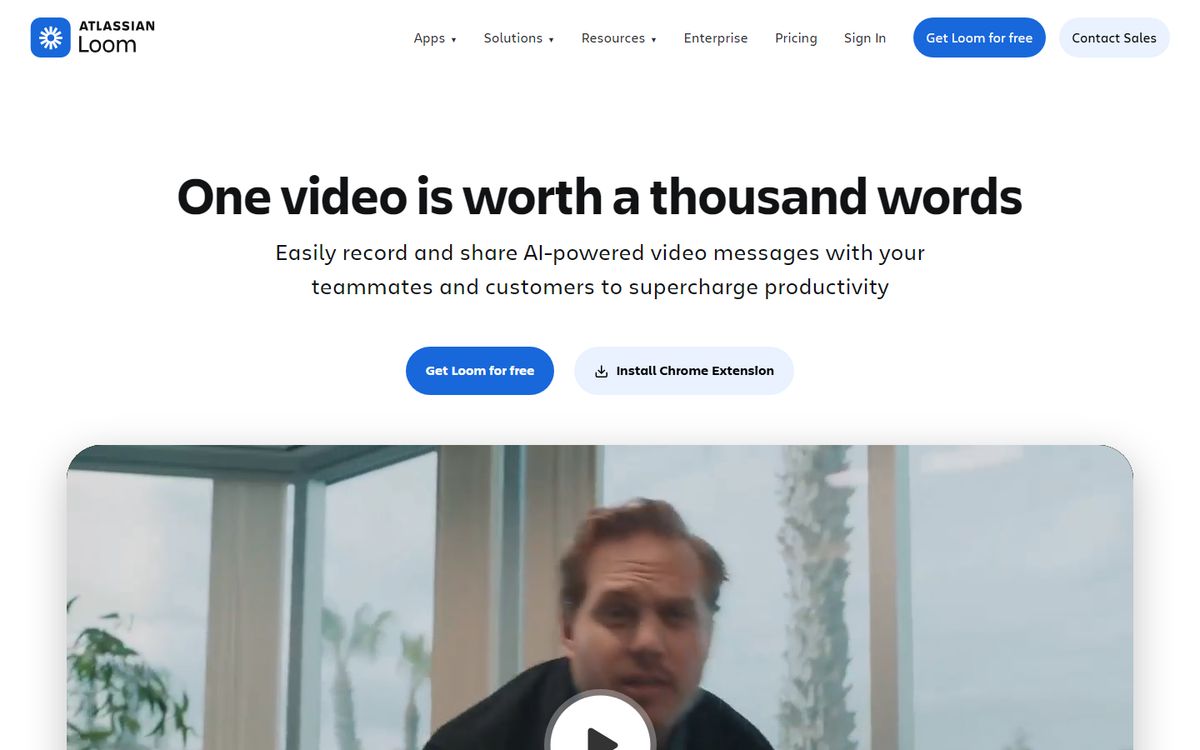
URL: loom.com/blog/how-to-give-feedback-async
Estimated monthly organic traffic: 15,000+
Loom's content targets the async work movement -- a topic that exploded during the remote work shift and continues to be relevant for distributed teams. The content positions Loom as the tool that makes async feedback possible.
What makes it work:
- Trend alignment: Loom identified the remote/async work trend early and built substantial content authority before competition arrived. First-mover advantage in content is real.
- Embedded product demos: Loom blog posts frequently embed short Loom videos demonstrating the concepts being discussed. Reading about async feedback while watching a Loom video of async feedback being given is a powerful demonstration.
- Shareable with existing customers: The post is also a retention tool -- existing Loom users share it with teammates to convince them to use Loom more.
The lesson: Content should serve both acquisition and retention. The best posts are ones your existing customers want to share.
Ready to put this into practice?
Averi turns these strategies into an automated content workflow.
9. Canva -- "How to Make a Presentation"
URL: canva.com/learn/how-to-make-a-presentation
Estimated monthly organic traffic: 400,000+
Canva's content strategy is built on massive-volume how-to content that converts readers into free users. "How to make a presentation" is a top-10 query in Canva's niche, and they've built a comprehensive guide that does exactly what the searcher wants to know.
What makes it work:
- Interactive elements: Canva's guides often include embedded design examples readers can explore. The content and the product are intertwined.
- Free tier conversion: The CTA is always to use a free Canva template, which creates immediate product usage. You read about how to make a presentation, click the free template, and you're a Canva user.
- SEO + design investment: The posts are visually designed, not just written. This reduces bounce rate and positions Canva as a design company rather than a text-heavy tech company.
The lesson: If your product solves the problem you're writing about, make using the product the most natural next step -- not signing up for a trial.
10. Drift -- "What is Conversational Marketing?"
URL: drift.com/blog/conversational-marketing
Estimated monthly organic traffic: 20,000+
Drift invented the term "conversational marketing" and then wrote the definitive guide to it. This is the ultimate example of category creation through content -- using the blog to establish a new vocabulary that your product naturally fulfills.
What makes it work:
- Coined terminology: When you name a category and build the authoritative definition of it, you win every time someone searches for that term. Drift owns "conversational marketing" the same way Salesforce owns "CRM."
- Multi-format distribution: The core post became a book, a podcast series, conference programming, and dozens of derivative posts. One idea, many content formats.
- Competitor positioning: By defining conversational marketing and explaining how traditional forms/chatbots fail to achieve it, Drift implicitly positions their product as the only true solution.
The lesson: The most powerful SaaS content isn't about your product -- it's about the new category your product creates or champions.
11. Monday.com -- "Project Management Templates"
URL: monday.com/lp/project-management-templates
Estimated monthly organic traffic: 50,000+
Template-based content is Monday's most powerful traffic driver. They rank for hundreds of "[industry] project management template" queries by creating purpose-specific template landing pages, each of which drives directly to product usage.
What makes it work:
- Intent + template alignment: Someone searching for a "marketing project management template" wants to use a template, not read about project management. Monday delivers the template immediately.
- Massive template library: Monday has hundreds of specific templates, each targeting a specific use-case keyword. The breadth of coverage captures long-tail traffic at scale.
- Template as trial: Downloading and customizing a Monday template is essentially a hands-on product trial without the "sign up first" friction.
The lesson: Build tools and templates, not just articles. Templates convert at dramatically higher rates than how-to posts because they reduce the distance between reading and doing.
12. Zapier -- "Best Project Management Software"
URL: zapier.com/blog/best-project-management-apps
Estimated monthly organic traffic: 80,000+
Zapier's "best of" tool roundups are among the most valuable content assets on the internet -- they target high-commercial-intent queries at scale, and they feature tools that integrate with Zapier (which subtly reinforces Zapier's value proposition).
What makes it work:
- Objective, honest reviews: Zapier's roundup posts actually evaluate tools critically. This builds enormous trust. Readers come back to Zapier when evaluating any tool category.
- Comparison integration: Each reviewed tool includes Zapier integration details ("This tool has 1,000+ Zaps available"). The content creates its own Zapier use case.
- Regular updates: The posts are updated quarterly with current pricing and features, which maintains rankings and reader trust.
The lesson: Creating useful, honest content that mentions your competitors can still win -- if you do it better than anyone else.
13. Mailchimp -- "Email Marketing Benchmarks"
URL: mailchimp.com/resources/email-marketing-benchmarks
Estimated monthly organic traffic: 70,000+
Original data content is one of the highest-leverage content investments a SaaS company can make. Mailchimp publishes email marketing benchmarks by industry, drawing on anonymized data from billions of emails sent through their platform. This data exists only because of their product.
What makes it work:
- Unique data moat: No competitor can publish this exact dataset. Mailchimp's scale gives them access to data that makes their content genuinely unreplaceable.
- Backlink magnet: Marketers cite benchmark data constantly. Every article that says "average email open rate is X%" and links to Mailchimp's benchmark page is a free backlink.
- Annual update ritual: The post is updated annually, giving Mailchimp a PR cycle ("New 2024 Email Marketing Benchmarks Released") and fresh search signals each year.
The lesson: Proprietary data is the most powerful content moat. Look at what data your product generates and figure out how to publish it as an industry resource.
14. Hotjar -- "User Experience Design Guide"
URL: hotjar.com/ux-design
Estimated monthly organic traffic: 35,000+
Hotjar targets the UX research and product design audience -- teams who need to understand user behavior. Their UX guide is a long-form educational resource that positions Hotjar as the tool UX professionals use.
What makes it work:
- Clear audience definition: Every piece of Hotjar content is written for UX researchers, product managers, and designers. This clarity makes the content feel specifically relevant.
- Methodology framework: Hotjar doesn't just explain UX -- they present a UX research methodology that naturally requires the kind of behavioral data Hotjar collects (heatmaps, session recordings, surveys).
- Free tool inclusion: Hotjar's free tier is prominently featured as the starting point for implementing the methodology described.
The lesson: Build educational content around a methodology, then position your product as the tool that implements it.
15. Figma -- "Design Thinking Process"
URL: figma.com/resources/learn-design/design-thinking
Estimated monthly organic traffic: 25,000+
Figma's educational content library targets designers who are learning and growing their craft. This builds a community of loyalists who use Figma throughout their career and become internal champions at every company they join.
What makes it work:
- Career-stage awareness: Figma knows their users are often early in their design careers. Building educational content creates long-term loyalty -- someone who learned design thinking through Figma's resources will evangelize Figma for 20 years.
- Community signals: Figma integrates links to their community (plugins, templates, community files) throughout educational content, turning learning into participation.
- Expert-contributed content: Figma collaborates with senior designers to create content, which expands their reach into established design communities.
The lesson: The most valuable customers are often not the buyers -- they're the users who influence buying decisions. Build content for practitioners.
Common Patterns Across the Best SaaS Blogs
Looking across these 15 examples, several principles emerge:
1. Every post serves a specific persona at a specific stage. None of these posts try to speak to everyone. HubSpot's marketing plan guide is for marketing managers at mid-sized companies. Stripe's payments infrastructure content is for engineering leaders. Define your reader before you write a word.
2. The CTA converts curiosity into product usage, not just leads. The best conversion mechanisms are free templates, free tools, and free trials -- not "download our ebook" or "schedule a demo." Make the next step feel like more value, not a commitment.
3. Data and original research are content multipliers. Original data gets cited, shared, and linked to. Every SaaS company generates unique data by virtue of having customers. Find a way to publish it.
4. Update cadence matters as much as publishing cadence. Half of these posts are updated versions of articles that first published 3-5 years ago. The traffic they generate is the result of compound interest on a content investment made years earlier.
Further Reading
Frequently Asked Questions
How long should a SaaS blog post be?
It depends on the keyword intent. For informational and educational content targeting competitive keywords, 2,000-4,000 words is typically needed to compete. For product-focused content and use-case pages, 1,000-1,500 words is often sufficient. The right length is whatever fully satisfies the searcher's intent -- not longer, not shorter.
How do the best SaaS companies measure blog ROI?
The metrics vary by stage. Early-stage: organic traffic growth and email subscribers. Growth stage: SQL-attributed organic traffic (leads that come from organic content and convert to sales-qualified leads). Enterprise stage: pipeline influenced by content, measured through first-touch and multi-touch attribution in a CRM like HubSpot or Salesforce.
How often should a SaaS blog publish new posts?
Quality over frequency, consistently. Publishing one thoroughly researched, well-optimized post per week beats publishing five thin posts. HubSpot famously experimented with reducing publish frequency while increasing post quality and saw organic traffic increase. Freshness matters less than depth.
What's the single biggest mistake SaaS companies make with their blog?
Writing for their product features instead of their buyer's problems. A post titled "Introducing Our New Dashboard Analytics Feature" helps zero people who don't already know you. A post titled "How to Measure Team Productivity Without Micromanaging" helps thousands of people who are exactly your target customer. The best SaaS blogs meet buyers at the problem, not the solution.
Should early-stage startups invest in a blog?
Yes, but with discipline. Early-stage startups should pick one content bet: own a niche topic completely rather than covering many topics shallowly. The fastest path to content-driven growth is ranking #1 for 5-10 highly specific keywords your ICP searches for, then expanding from there.
Explore More
- 📋 Template: Blog Post Template for B2B SaaS
- 📋 Template: Product Launch Blog Post Template
- 📖 Guide: How to Write a Blog Post That Ranks and Converts
- 📖 Definition: What Is a Blog Post?
- 👤 Guide: Content Marketing for B2B SaaS
- 🔌 Integration: Averi + WordPress: Publish AI Content Directly to Your Blog
- 📖 Guide: SaaS Content Marketing: The Complete Guide for 2026
- 📖 Definition: What Is Content Gap Analysis?
Related from our blog
How to Build an AI Content Engine That Grows Your Startup →
Build a system that turns strategy into published content.
The 2026 Startup Content Playbook →
Budget-specific content strategies for every stage.
Content Marketing ROI: Real Numbers from Real Founders →
Actual ROI data from startups investing in content.
From the Averi Blog
Start Your AI Content Engine
Ready to put this into practice? Averi automates the hard parts of content marketing — so you can focus on strategy. Join 1,000+ teams already using Averi.
Related Resources

Blog Post Template for B2B SaaS
Write better blog posts faster with these 5 proven templates. Includes how-to guides, listicles, comparison posts, thought leadership, and case studies.

Content Marketing for B2B SaaS
The complete B2B SaaS content marketing playbook. Covers full-funnel content strategy, SEO, thought leadership, case studies, and pipeline attribution.

Best Startup Landing Page Examples (With Breakdown)
Study 12 high-converting startup landing pages. Full breakdown of headlines, value props, social proof, CTAs, and design patterns that drive signups.

Best Content Marketing Strategy Examples from Startups
See how 10 startups built content engines that drove real growth. From HubSpot to Notion to Buffer — full strategy breakdowns with metrics and lessons.

Best B2B Email Marketing Examples
Study 15 B2B emails that actually get opened, clicked, and converted. Covers welcome sequences, nurture drips, product updates, and newsletters with full analysis.

Best Thought Leadership Content Examples
Study 10 pieces of thought leadership that built brands and careers. Analysis of what makes them compelling, shareable, and authority-building.