
Best SEO Case Study Examples from Startups
See how 10 startups went from zero to significant organic traffic. Full breakdowns of content strategy, keyword targeting, link building, and timelines.
💡 Key Takeaway
See how 10 startups went from zero to significant organic traffic. Full breakdowns of content strategy, keyword targeting, link building, and timelines.
SEO is full of general advice. "Write quality content." "Build backlinks." "Optimize your title tags." What's harder to find are specific, documented accounts of what actually worked -- the methodology, the timeline, the results, and the honest failures.
These 10 case studies are drawn from documented growth stories, public blog posts, and published analyses. Each one includes the specific approach, the outcome, and the lesson that applies to startups building their organic presence.
1. Ahrefs -- How Content Transparency Drives Compounding Traffic
The situation: Ahrefs is an SEO tool, which means their audience is uniquely capable of analyzing and scrutinizing their content strategy. Early Ahrefs content was solid but unremarkable -- standard SEO tutorials that existed in a competitive space with Moz, SEMrush, and others.
The approach: Ahrefs shifted to radical transparency and data-forward content. Instead of "how to do keyword research," they published "how to do keyword research using exactly these steps in Ahrefs, with real screenshots and real data." Every tutorial became a product demo embedded in genuinely useful education.
They also introduced a "business potential" score for keyword targeting -- internally, they only write about topics where ranking drives direct business value (people searching for keyword research advice need an SEO tool). This disciplined targeting means their content investment is efficient.
The results: The Ahrefs blog generates an estimated 2.7 million monthly organic visitors. Their YouTube channel has 1M+ subscribers. Single posts regularly accumulate hundreds of backlinks organically.
The lesson: SEO content should be evaluated on business potential, not just search volume. High-traffic posts that attract the wrong audience don't drive growth.
2. HubSpot -- The "Growth Machine" Blog Scaling Story

The situation: HubSpot's blogging program started in 2006 as a marketing experiment. By 2011-2012, they had published enough posts to see compounding traffic patterns emerge -- older posts continued to rank and drive leads long after publication.
The approach: HubSpot doubled down on a data-driven blogging approach: researching which keywords their ICP (marketing managers at SMBs) searched for, publishing comprehensive posts, and building internal linking structures that distributed authority across the domain.
Crucially, HubSpot invented the "historical optimization" methodology: systematically updating old posts that ranked on pages 2-3 to push them to page 1. This strategy reportedly increased HubSpot's organic traffic by 100% within a year, largely from improvements to existing content.
The results: HubSpot's blog became one of the top 5 most-trafficked marketing blogs globally. The blog drives an estimated 30-40% of their total marketing leads.
The lesson: The best SEO investment you can make in Year 3+ is improving existing content, not just creating new content. Historical optimization is consistently underutilized.
Averi automates this entire workflow
From strategy to drafting to publishing — stop doing it manually.
3. Zapier -- Programmatic SEO at Scale
The situation: Zapier connects 5,000+ apps with automation workflows. The obvious SEO opportunity: every combination of two apps is a potential search query. "Slack and Trello integration," "Gmail and Google Sheets automation," and thousands of similar queries.
The approach: Zapier built a programmatic SEO strategy -- templated pages that dynamically populate for each app-to-app combination. Each page follows the same structure (what these apps do, why you'd connect them, how to set it up, popular Zap templates), but is generated from app data rather than written manually.
The scale is staggering: Zapier has tens of thousands of these integration pages, each targeting a specific two-app combination query. Combined, they rank for an enormous long-tail keyword universe.
The results: Zapier generates an estimated 5+ million monthly organic visits. A significant portion of this traffic comes from the programmatic integration pages. Each page drives signups from users who are ready to create their first Zap.
The lesson: If your product has a combinatorial structure (connects multiple things, serves multiple use cases, has many configurations), programmatic SEO can create enormous organic scale with limited ongoing content investment.
4. Canva -- Template Pages as SEO Engine
The situation: Canva's product is a design tool. The obvious SEO opportunity: people search for "[type of design] templates" constantly -- resume templates, presentation templates, flyer templates, social media templates, and thousands of variations.
The approach: Canva created individual landing pages for each template category, each optimized for the specific search query. "Free resume templates," "presentation templates," "business card templates" -- each page features relevant Canva templates, SEO-optimized content, and direct pathways into the Canva product.
Each template page is both an SEO asset and a conversion page -- it ranks for the query, delivers on the searcher's intent (show me templates), and converts the visitor into a Canva user by giving them a one-click path to start customizing.
The results: Canva's template pages collectively generate millions of monthly organic visits. The conversion rate from these pages is extremely high because the searcher's intent (find a template) is perfectly matched by the page's content and CTA.
The lesson: SEO pages that perfectly match search intent and deliver a product experience (not just information) convert at significantly higher rates than educational content alone.
5. Monday.com -- Aggressive Bottom-of-Funnel Content Investment
The situation: Monday.com entered a competitive project management space with Asana, Jira, Trello, and Basecamp already well-established. Competing on generic "project management" keywords would be expensive and slow.
The approach: Monday.com invested heavily in three specific content types:
- Comparison pages: "Monday.com vs Asana," "Monday.com vs Trello," "Monday.com vs Jira" -- pages that target bottom-of-funnel searchers who are actively evaluating options
- Template pages: "Marketing project management template," "construction project management template" -- targeting use-case specific queries
- Alternative pages: "Asana alternatives," "Jira alternatives" -- capturing competitors' dissatisfied users
This content is bottom-of-funnel by design -- the searchers are already convinced they need project management software, they're just choosing which one.
The results: Monday.com's comparison and alternative pages drive a significant portion of their organic signups. The conversion rate from these pages is 3-5x higher than top-of-funnel content because of the searcher's buying intent.
The lesson: Bottom-of-funnel content (comparison pages, alternative pages, best-of lists) converts at dramatically higher rates than educational content. Don't neglect it.
Build your content engine with Averi
AI-powered strategy, drafting, and publishing in one workflow.
6. Backlinko (Brian Dean) -- Quality Over Quantity
The situation: Brian Dean launched Backlinko in 2013 in a market dominated by Moz's large content library and growing competition from other SEO blogs.
The approach: Rather than matching competitors' publishing volume, Dean went the opposite direction: publish one post per week (or less), but make each one the definitive resource on its topic. Exhaustive research, professional design, and active promotion to relevant communities for every post.
Dean also pioneered the "skyscraper technique" -- finding top-ranking content on a topic, creating a definitively more comprehensive version, and reaching out to sites linking to the original.
The results: Backlinko built a top-10 SEO blog with fewer than 200 total posts. Individual posts consistently rank in the top 3 for high-competition SEO keywords. The blog reportedly generated 6-figure recurring revenue with a small team.
The lesson: In content-saturated niches, quality-over-quantity is a viable differentiation strategy. One exceptional post can outrank 100 mediocre ones.
7. Hotjar -- Solving the "Who Links to What?" Problem
The situation: Hotjar is a user behavior analytics tool. Their core SEO challenge: their primary keywords ("heatmap tool," "session recording software") have low search volume and high competition. Relying on these keywords alone would severely limit organic growth.
The approach: Hotjar expanded their content strategy to target the buyer's entire educational journey -- not just the moment they're ready to buy a heatmap tool, but the much longer journey of learning about UX research, user experience design, conversion optimization, and product analytics.
By owning educational content about UX research methodology (the category their product serves), Hotjar attracts users months before they're ready to buy a specific tool. By the time those users need a heatmap tool, Hotjar is the brand they already trust.
The results: Hotjar generates 1M+ monthly organic visitors, the vast majority from educational content about UX research rather than product-specific queries.
The lesson: Your product category may have limited search volume. The practice your product supports almost certainly has much more. Build content around the practice.
8. Notion -- Community-Generated SEO at Scale
The situation: Notion has a massive user base and an active creator community that builds templates, tutorials, and extensions. The SEO challenge: how to capture the enormous long-tail search traffic for specific Notion use cases.
The approach: Rather than building all their SEO content in-house, Notion built infrastructure for user-generated content to earn organic traffic. The Notion Template Gallery is both a product feature and an SEO engine -- each template page targets a specific use case query ("study schedule template Notion," "project management Notion template," etc.).
Notion also invested in YouTube creator partnerships, ensuring that the top video search results for Notion tutorials feature Notion-friendly creators rather than competitors.
The results: The Notion Template Gallery has thousands of pages, collectively targeting thousands of long-tail queries. User-generated tutorials on YouTube ensure Notion's organic presence extends beyond their owned web properties.
The lesson: Building infrastructure for community content creation can scale your SEO presence far beyond what an in-house team can produce.
Ready to put this into practice?
Averi turns these strategies into an automated content workflow.
9. Surfer SEO -- Writing About Your Own Product Category
The situation: Surfer SEO is a content optimization tool that helps writers create better-ranking content. Their obvious content opportunity: write about content optimization, which is exactly what their tool does.
The approach: Surfer's content strategy was remarkably focused: write the best educational content about content optimization on the internet. Every piece of content demonstrated the value of content optimization (by ranking well for competitive terms) while explaining the methodology Surfer is built on.
Surfer also published extensively about NLP (natural language processing) in SEO -- a topic they had genuine expertise in from building their product -- which established them as a technical authority in a space that respects technical rigor.
The results: Surfer's blog became one of the top-10 most-read content marketing / SEO blogs within 3 years of launch. The content strategy drove a significant portion of their growth from under $1M to over $10M ARR.
The lesson: Writing about the exact problem your product solves is not circular -- it's targeting the highest-intent audience possible. Your product's domain is your content's natural home.
10. Figma -- Building for the Community, SEO as a Byproduct
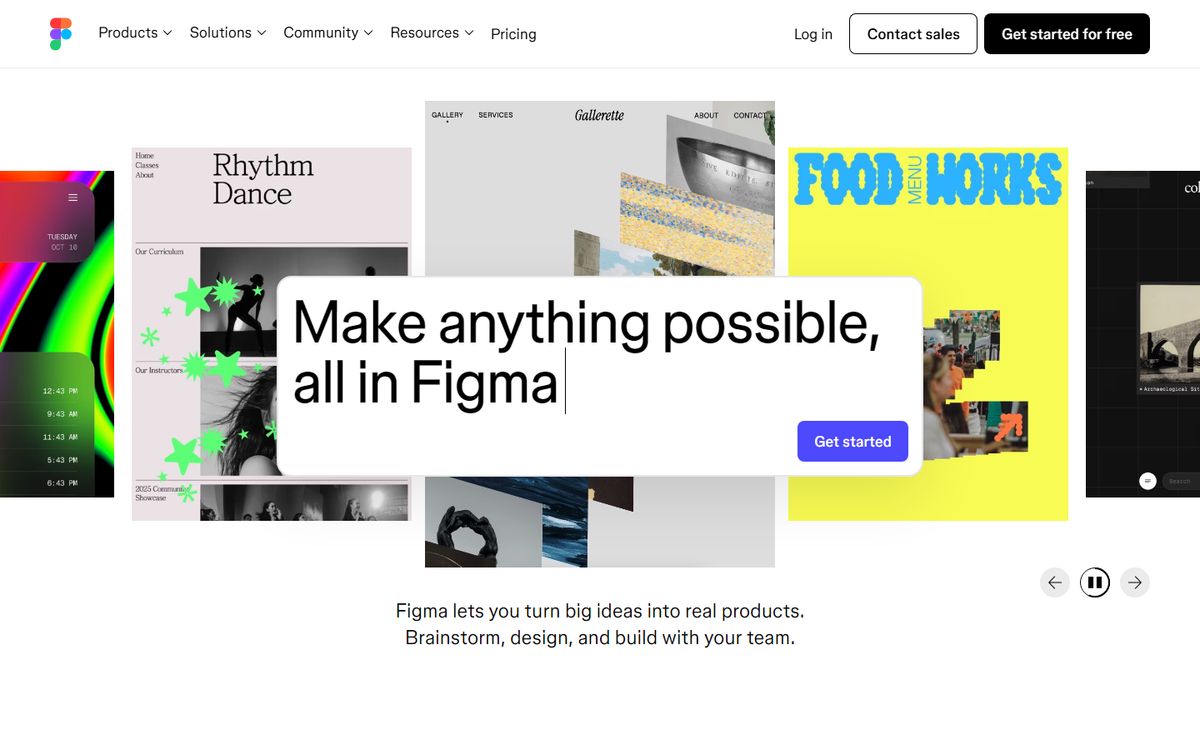
The situation: Figma's SEO challenge was unusual: their users are designers, a community that is sophisticated about brand authenticity and will reject content that feels like marketing.
The approach: Figma invested in content that designers genuinely wanted -- design tutorials, design process guides, designer interviews, and education resources. The SEO value was real (these pieces rank for design-related queries) but the content was designed to serve the community first.
Figma also built out the Figma Community (user-shared files, plugins, templates) as a content ecosystem with SEO implications. Every community file is a page that can rank for specific design template queries.
The results: Figma's content and community strategy contributed to over 4 million registered users. The community-generated content represents an enormous long-tail SEO asset that Figma didn't pay to create.
The lesson: Building for your community's genuine needs creates organic content, backlinks, and trust simultaneously. Don't let SEO optimization override the question of whether your content is actually useful.
Cross-Cutting Principles from These 10 Case Studies
1. Match content format to business model. Zapier's programmatic SEO works because their business model (app integrations) is programmatic by nature. HubSpot's comprehensive guides work because their product (a marketing platform) benefits from attracting all types of marketers. Your SEO strategy should emerge from your business model, not be imposed on it.
2. Don't neglect existing content. HubSpot's historical optimization strategy consistently outperforms the ROI of new content creation for their team. If you have 100+ posts, you have an optimization backlog that may be more valuable than publishing more.
3. Community and user-generated content can scale what in-house teams can't. Notion, Figma, and Zapier all built ecosystems that generate SEO value beyond what their content teams produce directly.
4. Bottom-of-funnel content converts better. Every startup overinvests in top-of-funnel education and underinvests in comparison pages, alternative pages, and use-case specific landing pages. The latter converts at 3-10x the rate of the former.
Further Reading
Frequently Asked Questions
How long does SEO take to show results for a new startup?
For a new domain: 6-12 months to start seeing meaningful organic traffic, 18-24 months for significant compounding. Google's "sandbox" period for new domains makes early months frustrating. Startups with existing domains (even with thin content) can move faster. Buying an aged domain in your niche can accelerate this timeline.
What's more important for early SEO: content or backlinks?
For most startups, content comes first because it gives you something worth linking to. Creating excellent content and actively building a few high-quality links simultaneously is the practical approach. Don't let the perfect backlink strategy be the enemy of publishing content that earns links organically.
Should a startup target high-volume or low-competition keywords first?
Low-competition keywords first, always. A startup with a new domain targeting KD 70+ keywords will waste 6 months with nothing to show. Targeting KD 20-40 keywords builds domain authority and early organic traffic, which creates the foundation for competing on higher-difficulty terms in 12-24 months.
Is programmatic SEO worth the technical investment?
If your business model generates the data that makes programmatic pages genuinely useful (like Zapier's integration data or Canva's template library), absolutely. If programmatic SEO would produce thin, templated pages that don't serve users, it's more likely to harm than help.
How do you compete with established competitors who have much more domain authority?
Target keywords they don't own -- specifically long-tail keywords, use-case specific queries, and emerging topics in your space. Fresh angles on new topics often outperform older established content because Google favors freshness for timely queries. Building in a niche and expanding is always more effective than trying to displace established players on their core keywords.
Explore More
- 📋 Template: Customer Case Study Template
- 📖 Guide: How to Write a Case Study That Wins Deals
- 📖 Definition: What Is a Case Study?
- 📋 Template: Content Strategy Template for Startups
- 👤 Guide: Content Marketing for AI Startups
- 👤 Guide: Content Marketing for Bootstrapped Startups
- 🏢 Industry: Content Marketing for Biotech Startups: The Complete 2026 Guide
- 🏢 Industry: Content Marketing for Cleantech Startups: The Complete 2026 Guide
Related from our blog
AI-Powered SEO for B2B SaaS: Getting to Page 1 Without an Agency →
How startups are using AI to compete with enterprise SEO budgets.
Programmatic SEO for B2B SaaS: The Complete 2026 Playbook →
Scale your organic traffic with programmatic content at startup speed.
Google AI Overviews: How to Get Featured in 2026 →
Optimize your content for AI-generated search results.
From the Averi Blog
Start Your AI Content Engine
Ready to put this into practice? Averi automates the hard parts of content marketing — so you can focus on strategy. Join 1,000+ teams already using Averi.
Related Resources

Content Strategy Template for Startups
Download our proven content strategy template built for startups. Includes goals, audience mapping, channel strategy, content calendar, and KPIs. Used by 750+ teams.

SEO Content Brief Template
Create SEO-optimized content briefs that writers love. Includes primary/secondary keywords, search intent, SERP analysis, content structure, and word count targets.

Content Marketing for Startup Founders
You're building a product AND need marketing. This guide shows startup founders how to build a content engine that runs without constant attention.

SEO Content Marketing: The Complete Guide for 2026
Master SEO content marketing from keyword research and on-page optimization to link building and topical authority.

Publish SEO Content at Scale Without Sacrificing Quality
Dominate your niche with consistent, high-quality SEO content. Averi researches, writes, and optimizes articles that rank — week after week.

AI-Powered SEO Content That Actually Ranks
Not all AI content ranks. Learn how Averi combines keyword research, topical authority, and E-E-A-T signals to produce SEO content that earns top positions.