
Restaurant Content Marketing: The Complete Guide
How restaurants can use content marketing to fill seats, build a loyal following, and stand out in a crowded local market.
💡 Key Takeaway
How restaurants can use content marketing to fill seats, build a loyal following, and stand out in a crowded local market.
Restaurants operate in one of the most competitive small business categories on earth -- and the ones that thrive long-term are rarely just the ones with the best food. They are the ones that have built a compelling story, a loyal community, and a consistent digital presence that keeps their tables full even when the newness has worn off. Content marketing gives restaurants a way to compete for attention, loyalty, and new customers without relying exclusively on expensive advertising or the whims of delivery platforms.
Why Content Marketing Matters for Restaurants
The restaurant industry has always been word-of-mouth driven, but the mouth has moved online. According to a 2024 National Restaurant Association study, 72% of consumers say they look at a restaurant's social media before deciding to visit for the first time. Yelp, Google Maps, Instagram, and TikTok have become the new word of mouth -- and the restaurants that consistently show up on these platforms with compelling content are the ones that get the first visit, the return visit, and the recommendation to friends.
Search behavior plays an enormous role in restaurant discovery, particularly for local searches. "Best tacos near me," "date night restaurants [city]," "brunch spots [neighborhood]" -- these searches happen millions of times per day and the restaurants that appear in these results get customers that competitors never even had a chance to compete for. Local SEO driven by Google Business Profile optimization, review management, and website content is one of the most cost-effective marketing investments a restaurant can make.
For independent restaurants competing with chains, content marketing is one of the few areas where they hold a natural advantage. A national chain cannot tell the story of a local farmer supplier, cannot share the chef's personal journey with food, cannot capture the authentic neighborhood character that makes a local restaurant worth seeking out. Authentic storytelling -- through social media, email, and a genuine online presence -- is the independent restaurant's most powerful differentiator.
The economics make a compelling case as well. The average restaurant customer who feels a genuine connection to a restaurant visits 2-3x more frequently and spends 20-30% more per visit than one who sees it as interchangeable with other options. Content marketing -- specifically the kind that builds emotional connection and community -- is the investment that turns one-time visitors into regulars and regulars into advocates who recommend you to everyone they know.
Top Content Types That Work for Restaurants
Social Media Content (Instagram and TikTok)
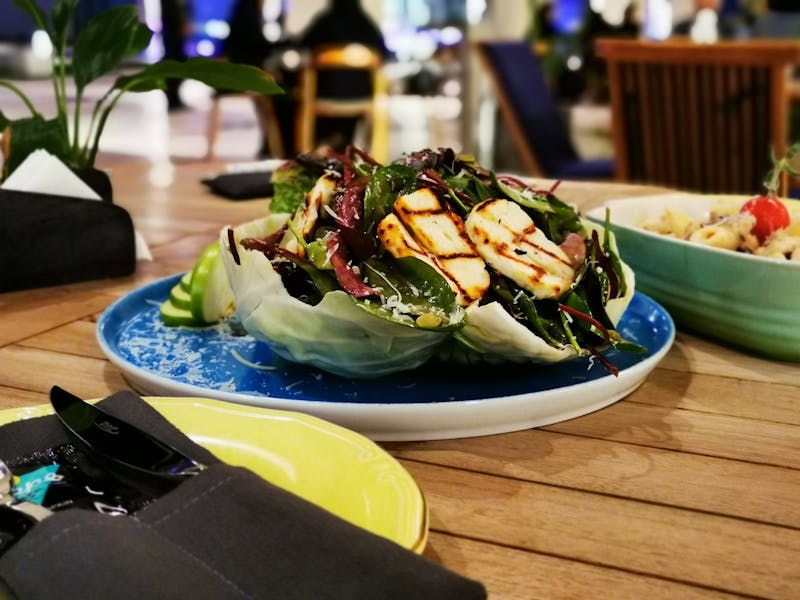
High-quality food photography and video is the foundation of restaurant content marketing. Instagram and TikTok are visual-first platforms where well-shot food photos and behind-the-scenes kitchen videos can go viral and drive hundreds of new customers through the door. Restaurants that invest in consistent, quality visual content -- whether through a professional photographer, a staff member with a good eye, or even well-lit smartphone photography -- dramatically outperform those that post sporadically or inconsistently.
Google Business Profile Posts and Optimization
Your Google Business Profile is often the first piece of content a potential customer sees. A fully optimized GBP -- with accurate hours, a compelling description, current menu information, regular photo updates, and active review responses -- is your most important local SEO asset. Weekly Google Posts (announcing specials, events, new menu items) signal freshness to Google's algorithm and keep your listing informative for browsing customers.
Behind-the-Scenes and Chef Content
People do not just eat at restaurants -- they eat at places they feel connected to. Behind-the-scenes content -- the morning prep, sourcing trips to the farmers market, the chef's creative process, the team celebrating a busy Saturday night -- humanizes your brand in a way that food photos alone cannot. Restaurants that consistently share the people and story behind the food build loyal communities who feel invested in the restaurant's success.
Email Newsletter
A restaurant email newsletter is one of the highest-ROI content investments you can make. Your email list is an audience you own -- immune to algorithm changes, platform shutdowns, or delivery platform fees. A regular newsletter covering upcoming events, seasonal menu changes, staff spotlights, and exclusive offers keeps your regulars engaged and brings lapsed customers back. Even a simple monthly email with upcoming events and a special for subscribers can drive measurable revenue.
Blog and Local SEO Content
A restaurant blog is not necessary for every establishment, but for those in competitive markets or with a story worth telling, blog content that targets local search queries can drive significant organic traffic. "Best date night restaurants in [city]," "where to eat before the [local venue] concert," "farm-to-table restaurants in [neighborhood]" -- these are the searches your blog content can help you appear for, reaching customers who are researching dining options and who are ready to book.
User-Generated Content
Customers who photograph their food and share it on Instagram are providing free marketing with social proof. Restaurants can systematically encourage UGC through photo-worthy plating, great lighting, table signage encouraging tagging, social media contests, and by actively resharing customer content. A restaurant whose beautiful UGC regularly appears in customer feeds has a word-of-mouth engine that money cannot buy.
Video Content and Reels
Short-form video on Instagram Reels and TikTok has become essential for restaurant discovery among younger demographics. Recipe reveal videos, tableside preparation content, dessert shots, cooking tutorials, and "a day in the life" content all perform well. The algorithm on both platforms actively promotes new content from accounts with consistent posting patterns, meaning restaurants that post video regularly get outsized organic reach.
Averi automates this entire workflow
From strategy to drafting to publishing — stop doing it manually.
15 High-Value Keywords to Target
| Keyword | Search Volume Estimate | Difficulty | Content Type |
|---|---|---|---|
| restaurants near me | 30,000,000+/mo | Very High | Google Business Profile |
| best [cuisine type] in [city] | 3,000-20,000/mo | High | GBP, website, blog |
| brunch [city] | 5,000-30,000/mo | High | Location page, GBP |
| date night restaurants [city] | 2,000-10,000/mo | Medium | Blog post, GBP |
| [neighborhood] restaurants | 1,000-8,000/mo | Medium | Location page |
| happy hour [city] | 3,000-15,000/mo | Medium | GBP, website |
| private dining [city] | 1,000-5,000/mo | Low | Website landing page |
| family-friendly restaurants [city] | 1,500-6,000/mo | Low | Blog, GBP |
| gluten-free restaurants [city] | 1,000-4,000/mo | Low | Website, GBP |
| farm to table [city] | 500-3,000/mo | Low | Blog post, GBP |
| [restaurant name] menu | 500-10,000/mo | Low | Website menu page |
| restaurants open late [city] | 2,000-8,000/mo | Medium | GBP, website |
| best pizza [city] | 3,000-12,000/mo | High | GBP, website |
| [cuisine] food near me | 5,000-50,000/mo | High | GBP |
| restaurant week [city] | 1,000-5,000/mo | Low | Blog, GBP, email |
Sample Monthly Content Calendar
| Week | Topic | Format | Target Keyword | Distribution |
|---|---|---|---|---|
| Week 1 | New Spring Menu Reveal | Instagram carousel + Reel | best [cuisine] in [city] | Instagram, Facebook, email |
| Week 1 | Meet Our Chef: The Story Behind Our Kitchen | Blog + social | farm to table [city] | Website, Instagram, email |
| Week 2 | Behind the Scenes: Saturday Night Service | TikTok / Instagram Reel | -- | TikTok, Instagram |
| Week 2 | Best Date Night Spots in [City]: We Made the List | Blog post | date night restaurants [city] | Website, social |
| Week 3 | Customer Spotlight: Share Your Favorite Dish | UGC campaign | -- | Instagram, Facebook |
| Week 3 | This Week's Specials + Upcoming Events | Google Post + email | happy hour [city] | GBP, email list |
| Week 4 | Monthly Newsletter: What's New, What's Coming | -- | Email subscribers | |
| Week 4 | Recipe Reveal: How We Make Our [Signature Dish] | Video | -- | YouTube, TikTok, Instagram |
Content Strategy: Step by Step
1. Optimize Your Google Business Profile Completely
Before any other content activity, make your Google Business Profile as complete and compelling as possible. This is ground zero for restaurant local SEO. Ensure your hours are accurate (including holiday hours), your menu is updated, your description includes your top keywords and differentiators, your photos are high-quality and numerous (Google recommends 10+ photos), and you are actively posting updates weekly. Respond professionally to every review -- both positive and negative. GBP is your single highest-leverage content asset.
2. Build a Consistent Social Media Presence on 1-2 Platforms
Do not try to be everywhere. Choose the 1-2 social platforms where your target customers actually spend time -- for most restaurants this is Instagram and either TikTok (for younger demographics) or Facebook (for older or family-oriented demographics) -- and post consistently on those. Three to five times per week on Instagram with a mix of food photos, Reels, Stories, and behind-the-scenes content is a strong baseline. Consistency matters more than any individual piece of content.
3. Develop a Photography and Visual Content System
Invest in the visual quality of your content. This does not necessarily mean hiring a professional photographer every week -- it means training yourself or a staff member to shoot compelling food photography with good lighting (natural light or a basic ring light), clean backgrounds, and appealing composition. Set up a "photo station" in your restaurant where dishes look their best. Great visual content is the engine of restaurant social media and it is worth the modest investment in learning to produce it consistently.
4. Build and Grow Your Email List
Start collecting email addresses from customers through your reservation system, WiFi login (offer free WiFi in exchange for email), loyalty program sign-up, and website opt-in form. Send a welcome email to new subscribers immediately with a special offer. Then email your list at least twice a month -- once for events and specials, once for a more personal update or story. The cost of email marketing is nearly zero, and it reaches customers directly without algorithm interference.
5. Encourage and Leverage Reviews Actively
Reviews on Google, Yelp, and TripAdvisor are content that markets your restaurant even when you are not actively marketing. Develop a system for encouraging reviews: train front-of-house staff to mention Google reviews at the end of a great experience, add QR codes at the table, include a review request in your post-visit email sequence. Respond to every review publicly -- thank positive reviewers specifically, and respond to negative reviews professionally and constructively. Active review management signals to platforms and customers alike that you care.
6. Tell Your Restaurant's Story Through Content
The restaurants that build genuine customer loyalty give people something to connect with beyond the food. What is the story behind your restaurant? Why did you open it? Where do your ingredients come from? Who are the people who make it happen every day? This story, told consistently through social media, your website's About page, email newsletters, and video content, is your most powerful differentiator. People do not just eat food -- they patronize places and people they care about.
Build your content engine with Averi
AI-powered strategy, drafting, and publishing in one workflow.
Real Examples of Restaurant Content Marketing Done Right
Eataly has built one of the most compelling restaurant brand content operations, combining in-store experiences with a robust digital content strategy including recipes, Italian food education, chef profiles, and event programming that keeps customers engaged long between visits. Their content positions Eataly not just as a place to eat but as a destination for Italian food culture -- a positioning that commands premium pricing and intense customer loyalty.
Salt & Straw (the artisan ice cream chain) built their brand almost entirely on storytelling. Every flavor has a story -- the local farmer who grew the ingredient, the inspiration behind the combination, the seasonal event it celebrates. Their website, email newsletters, and social media consistently tell these stories, creating a level of customer engagement that is extraordinary for a dessert brand. People plan visits around seasonal flavor releases and eagerly await each newsletter.
Shake Shack has used content marketing, community engagement, and brand storytelling to differentiate in the crowded fast-casual burger space. Their social media content emphasizes community, local partnerships, and the fun of the brand rather than just the product. They consistently demonstrate that content marketing can work even for fast food -- the differentiation comes from how you tell the story, not just what you are selling.
Taco Bell (at a chain scale) has demonstrated the power of social media content and real-time marketing for restaurant brands. Their Twitter/X presence has been studied as a masterclass in brand voice -- irreverent, self-aware, and genuinely entertaining. For individual restaurants, the lesson is that authenticity and a distinctive voice in social media creates the kind of organic engagement that paid advertising cannot buy.
Common Mistakes to Avoid
Inconsistent Posting Schedules
The single biggest mistake restaurants make with social media content is posting in bursts followed by silence. An Instagram account that posts 10 times one week and then goes dark for three weeks tells the algorithm and potential customers that you are not reliable. Consistency -- even if it is just three posts per week -- builds the following, the engagement rate, and the algorithmic trust that drives organic reach. Build a posting schedule you can maintain and stick to it.
Ignoring Negative Reviews
A restaurant that responds graciously, professionally, and specifically to negative reviews often converts critics into regulars. A restaurant that ignores or argues with negative reviews compounds the damage and signals to potential customers that their experience does not matter. Every review -- good or bad -- deserves a human, personal response within 24 hours. Reviews are some of the most-read content about your restaurant; treat every response as public marketing.
Only Posting Promotional Content
Content that is constantly "Come in! We have a special!" becomes background noise. The most effective restaurant content mixes promotional posts with genuinely interesting, entertaining, or informative content -- recipe videos, chef stories, behind-the-scenes content, local partnership highlights, community involvement. The 80/20 rule applies: 80% of your content should be genuinely engaging and only 20% explicitly promotional.
Neglecting Your Website
Many restaurants treat their website as a static business card that gets updated once a year. A restaurant website that has current menus, hours, reservation links, high-quality photos, an active blog or news section, and schema markup for local SEO outperforms a static brochure site dramatically in local search. Update your website at minimum every time your menu changes, and invest in at least basic on-page SEO optimization.
Not Investing in Food Photography
Blurry, dark, or uninspiring food photos are worse than no photos at all. In the age of Instagram and food-forward social media culture, visual quality is the first filter through which potential customers evaluate your restaurant. You do not need to hire an expensive photographer for every dish -- but you do need to learn the basics of food photography or find someone on your team who has a good eye. Great photos are the single most powerful content asset a restaurant can deploy.
How Averi Can Help
Averi helps restaurants solve the content consistency problem that most busy operators face: the food is great, the team is working hard, but there is no time left to think about captions, blog posts, newsletters, or social strategy. Averi generates restaurant-specific content -- social media captions, email newsletters, blog posts about local dining, Google Business Profile posts, and promotional copy -- at the pace your business needs, tailored to your restaurant's voice, cuisine, and story.
For restaurant groups and multi-location operators, Averi provides the content infrastructure to maintain consistent brand voice across all locations while allowing for location-specific content that reflects each restaurant's unique neighborhood character and offerings. This combination -- brand consistency plus local authenticity -- is exactly what drives both local search rankings and genuine customer connection.
Averi's content is built around your goals: filling seats on slow nights, promoting specific menu items, driving reservations for private dining, building your email list, or establishing your chef's authority. Every piece of content is produced with your specific objective in mind, optimized for the channel it is intended for, and ready for your review before it goes live -- so you maintain creative control without doing the heavy lifting.
Explore More
- 🏢 Industry: Content Marketing for AI Companies: The Complete 2026 Guide
- 🏢 Industry: Content Marketing for Biotech Startups: The Complete 2026 Guide
- 👤 Guide: Content Marketing for Restaurant Owners
- 📖 Definition: What Is Content Marketing?
📬 Get more resources like this
Join 24,000+ marketers getting weekly insights on content strategy, SEO, and AI.
Enter your email for the downloadable version.
🛠️ Try our free interactive tools
Related from our blog
How to Build an AI Content Engine That Grows Your Startup →
Build a system that turns strategy into published content.
The 2026 Startup Content Playbook →
Budget-specific content strategies for every stage.
Content Marketing ROI: Real Numbers from Real Founders →
Actual ROI data from startups investing in content.
From the Averi Blog
Start Your AI Content Engine
Ready to put this into practice? Averi automates the hard parts of content marketing — so you can focus on strategy. Join 1,000+ teams already using Averi.
Related Resources

Content Marketing for Restaurants
Fill more seats and build a loyal following with social media strategies, local SEO, menu storytelling, and community-building content.

Content Strategy Template for Startups
Download our proven content strategy template built for startups. Includes goals, audience mapping, channel strategy, content calendar, and KPIs. Used by 750+ teams.

How to Build a Content Strategy from Scratch
A step-by-step guide to building a content strategy from zero. Covers goal-setting, audience research, channel selection, content planning, and measuring ROI.

How to Create a Content Calendar That Actually Works
Build a content calendar that your team actually sticks to. Step-by-step guide covering tools, cadence, planning workflows, and how to stay consistent.

How to Do a Content Audit (Step-by-Step)
A practical, step-by-step guide to auditing your content. Learn how to inventory, score, and prioritize existing content to improve SEO and conversions.
How to Measure Content Marketing ROI
Prove the value of your content investment. This guide covers attribution models, KPIs, analytics setup, and how to report content ROI to stakeholders.